Skip to content

Assess your home and start with practical measurements
First, perform a quick heat-load check: measure window area, insulation levels, and room-by-room square footage, then calculate required BTUs per room before exploring whether can mini splits heat nyc home in winter. For each room, multiply square feet by 30 to 60 BTU depending on insulation and ceiling height. Use the higher number for older, poorly insulated units. That actionable BTU target will guide sizing, number of indoor heads, and whether a cold-climate mini split is required.
How ductless mini splits produce heat in freezing weather
Mini splits move heat from outside air into indoor spaces using a refrigerant loop and a compressor. Modern inverter-driven compressors adjust output continuously to match demand, which reduces cycling losses and improves comfort. Cold-climate models use enhanced refrigerants, variable-speed compressors, and crankcase heaters to maintain performance at temperatures well below freezing. Performance charts from manufacturers show rated capacity at negative single-digit Fahrenheit for those models, which matters in New York winter nights.
Cold-climate vs standard mini split units
Choose cold-climate models when outdoor temperatures regularly drop below 20 F. Those units maintain higher percent capacity at low temperatures, often specified at 5 F or minus 5 F. Standard units can struggle or require an auxiliary heat source when temperatures fall into single digits. Verify manufacturer published capacity curves and make sure the unit supports defrost cycles optimized for the expected NYC winter load.
Sizing and zoning best practices for NYC apartments and houses
Sizing is the most common installation error. Oversized systems short cycle and waste energy while undersized systems cannot meet peak load. For multiroom homes, use multizone outdoor units paired with multiple indoor heads for independent temperature control. In New York brownstones and walkups, prioritize bedrooms and living areas with individual heads. In large open plans, a high-capacity floor-mounted or ceiling cassette head may be better than multiple small units.
Replacing a boiler with a mini split system: steps and considerations
- Inspect existing distribution. Removing radiators or baseboard heaters may require wall repair and rerouting piping. Decide whether to decommission the boiler or keep it as a backup.
- Perform a load calculation. Boilers often oversize heating capacity; use a fresh heat-loss calculation to size mini splits correctly.
- Select a layout. Choose single-zone or multi-zone outdoor units based on number of rooms and desired control.
- Plan refrigerant lines paths. Typical runs are 15 to 50 feet but can be extended with manufacturer guidelines. Consider vertical runs in multi-story buildings.
- Schedule electrical upgrades. Many systems require a dedicated 240 V circuit and a disconnect near the outdoor unit.
When to keep the boiler as a backup
Keep the boiler if the building requires hydronic heating for hot water or if the property has very poor insulation and would need several outdoor units to cover extreme nights. Boilers provide uninterrupted heat regardless of electricity interruptions when powered by alternative sources, but they are less efficient for zone control. A hybrid approach uses mini splits for daily comfort and the boiler as a reserve during occasional deep cold snaps.
Installation logistics in NYC areas
Installation in New York City often faces space and access constraints. Obtain any necessary permits and check local building or co-op/condo rules for exterior condensers. Plan for rooftop or courtyard condenser placement when street-level mounting is not permitted. Choose licensed HVAC contractors experienced with NYC regulations, single-point electric service, and line-set runs in building chases.
Costs, incentives, and payback expectations
Upfront costs vary by system size and complexity. A single-zone mini split can cost under $3,000 installed, while whole-home multizone installations often range from $8,000 to $25,000 depending on the number of heads and required electrical work. Factor in removal or decommissioning of the boiler if applicable. Check federal and state incentives for heat pump installations and energy efficiency rebates that can reduce net cost and shorten payback periods in New York.
Energy efficiency and operating cost comparison
Mini splits typically deliver high seasonal performance factors, especially in partial-load conditions due to inverter technology. In many cases, mini splits cost less to operate than oil or electric resistance heating and can rival or beat older gas boiler systems when matched correctly. Compare seasonal performance factor (SPF) or HSPF ratings and anticipate lower fuel use when zoning allows heating only occupied rooms.
Comfort, noise, and indoor air quality
Modern indoor heads operate quietly and provide rapid temperature adjustments. Wall-mounted heads offer easy installation and effective heat distribution for most rooms. Choose models with multi-speed fans, washable filters, and built-in dehumidification to maintain indoor air quality. Regular filter cleaning and annual technician checks will preserve performance through winter months.
Common pitfalls and how to avoid them
- Undersizing: Use professional heat-loss calculations rather than rule-of-thumb sizing.
- Poor placement: Avoid placing indoor heads where airflow is blocked or directed at sleeper areas.
- Ignoring electrical capacity: Confirm panel capacity and plan upgrades before installation.
- Skipping permits: Obtain permits to avoid fines and to ensure compliance with building codes.
Maintenance and winter readiness checklist
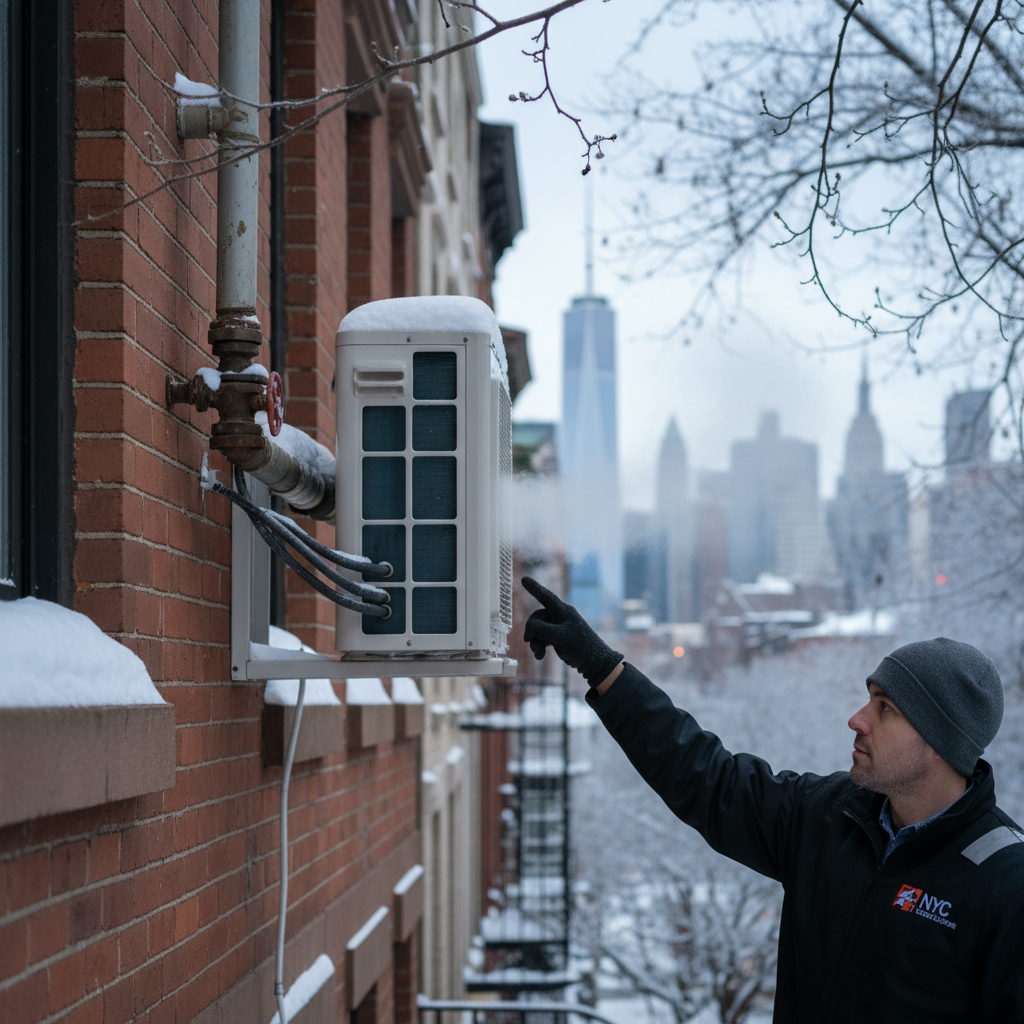
Before the cold season, flush indoor filters, confirm outdoor unit clearance of debris, verify defrost cycle operation, and schedule a professional service check. Keep at least 2 feet of clearance around condensers and plan to remove snow buildup promptly. These simple steps preserve capacity and reduce emergency service calls during cold spells.
Finding the right HVAC replacement partner in NYC
Choose a licensed contractor with documented mini split installations in NYC. Request references and on-site assessments, and verify experience with cold-climate models if winters are a primary concern. A reliable contractor will provide a written load calculation, detailed equipment specifications, a plan for refrigerant line routing, and transparent costs for permits and electrical work.
Decision flow: When a mini split replacement makes sense
If the home has clear zoning needs, reasonable envelope performance, and access for condensers, mini splits can provide efficient, comfortable heating for typical New York winters. If the structure suffers major heat loss, or if the owner wants a single fossil-fuel backup, consider a hybrid system or staged transition while improving insulation. Prioritize cold-climate models and professional sizing for the best results.
Final practical checklist
- Complete a room-by-room heat-loss calculation.
- Select cold-climate mini split models with published low-temperature capacity charts.
- Plan multizone layouts for controlled comfort and efficiency.
- Confirm electrical service and obtain permits in advance.
- Hire an experienced NYC contractor and get a written installation and warranty plan.
Closing note on winter reliability
With correct sizing, cold-climate equipment, and professional installation, mini splits can reliably provide heat for many New York homes through winter months. Follow the checklist above, evaluate hybrid options for backup, and focus on energy-saving measures like air sealing and insulation to reduce required capacity and operating costs.