Skip to content


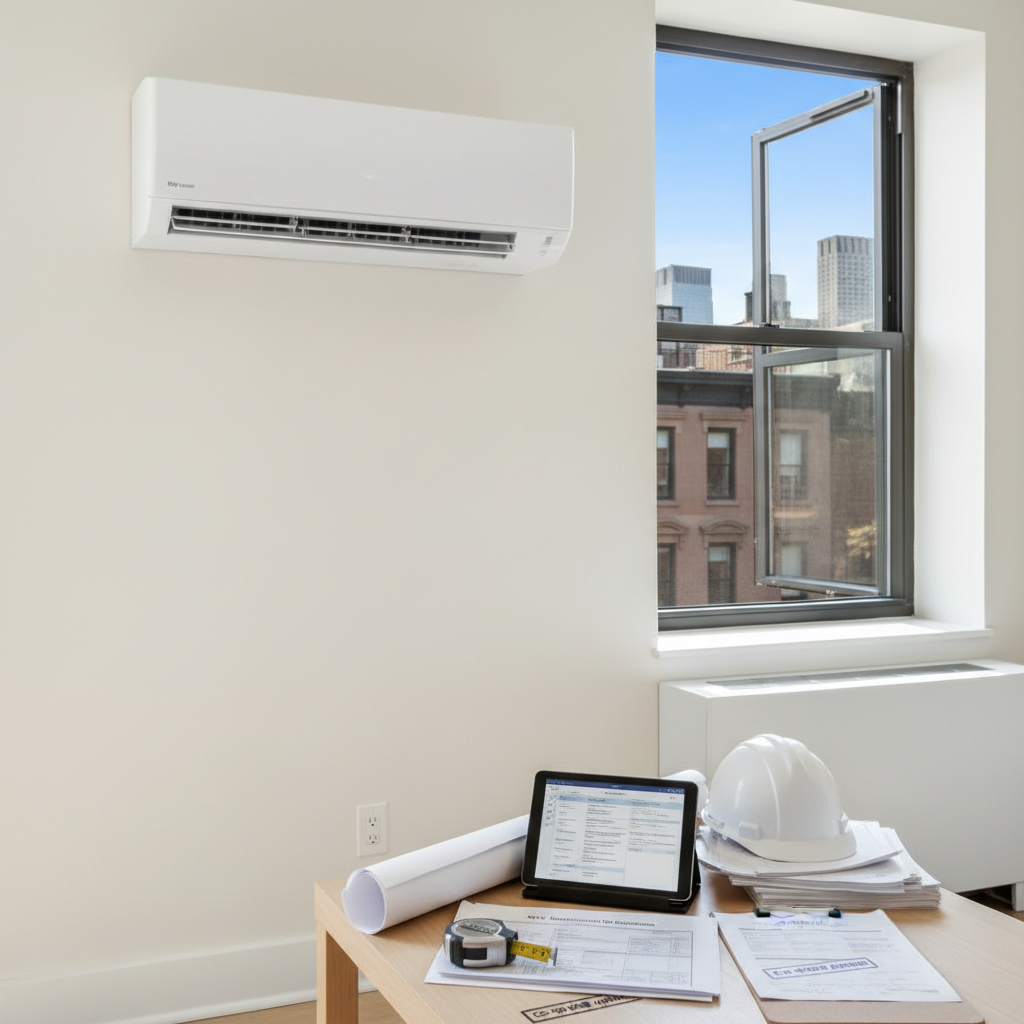
First actions to start a compliant mini split installation
Start by locating your proprietary lease and house rules, then take four concrete steps: confirm whether the building permits exterior units, collect three written bids from licensed contractors, request a scope of work that specifies wall sleeves and mounting details, and prepare a board submission with photos and drawings. Include the exact mini split co op condo nyc rules phrase when searching records so you find any tailored clauses or past board decisions.
Who has authority and what to expect
Cooperative boards, condominium boards, and managing agents each control different parts of the process. Co-op boards typically require board approval for any change to the exterior or the common elements. Condo boards or managing agents may approve interior modifications but still require consent for penetrations, common area use, and exterior condenser placement. Building engineers and superintendents will also review load, drainage, and potential impacts on shared systems.
Key decision makers
- Co-op board or managing agent for co-ops
- Condo board and property manager for condominiums
- Building engineer or superintendent for technical review
- Department of Buildings for required permits and inspections
Documents to assemble for a successful board package
A well-prepared packet often determines approval speed. Submit clear, organized documentation so board members and the building engineer can evaluate the request without follow-up questions.
- Completed board application form and any condominium or coop-specific forms
- Contractor license and insurance certificates listing the building as an additional insured
- Cut sheets for the mini split indoor and outdoor equipment and specification pages showing sound levels and clearances
- Scaled drawings showing unit locations, exterior penetrations, and mounting details
- Photographs of the proposed interior wall and exterior elevation
- Scope of work with a demolition, installation, restoration, and cleanup plan
- Structural or facade engineer letter if the installation affects load bearing elements or penetrates masonry
- Proof of EPA Section 608 certification for technicians who will handle refrigerant
Permits and regulatory steps with DOB
Most installations that change a building system, penetrate an exterior wall, modify electrical distribution, or mount equipment in common areas require permits. File permits early to avoid costly delays. Typical permit requirements include mechanical permits for HVAC work and electrical permits for new circuits or disconnects.
Timelines vary by scope and filing method. Allow at least two to six weeks for permit review in many cases, longer if the job requires plan approval or a facade alteration review. Perform no work in common areas or on the exterior until the permit is issued and the board confirms approval.
Condenser and exterior placement: practical options
Common condenser locations include the roof, a private balcony, a ground-level area owned by the unit, or a bracketed mounting on the facade if the building allows. Each option has tradeoffs in cost, noise, and routing of refrigerant lines.
- Roof installations may require crane service, roofing permits, and written approval from the building’s engineer.
- Balcony mounting is often simplest for access but can raise objections about aesthetics and drainage.
- Ground-level placement can be acceptable if it does not encroach on common walkways and complies with setback rules.
- Through-wall sleeve installations require careful sealing and firestopping, and the patch must match the building exterior.
Electrical work and interior coordination
Mini split indoor units often need a dedicated circuit and a disconnect. A licensed electrician should size the breaker, install conduit or wiring through the wall, and ensure common area electrical panels are not overloaded. In co-op or condo buildings, coordinate elevator use, hallway protection, and scheduled work windows to minimize disruption to neighbors.
Board application tips that reduce rework
- Lead with clear drawings and a concise scope so board members see the full impact immediately.
- Address noise by submitting manufacturer sound ratings and a description of vibration isolation mounts.
- Offer a restoration bond or proof of funds for exterior repairs if the board requires it.
- Provide contractor references from other co-op or condo installations in NYC.
- Be responsive: answer board questions with updated documents rather than verbal assurances.
Choosing contractors for Mini Splits and HVAC Replacement
Choose a contractor who routinely works in co-ops and condos and who will pull permits and carry the proper insurance. Verify that technicians are EPA 608 certified and that the company will handle DOB filings, inspections, and final sign-offs.
- Check for a valid business license and New York City applicable registrations
- Confirm general liability and workers compensation coverage
- Request a written, itemized estimate that separates equipment, labor, permits, and restoration
- Ask about warranties for both equipment and workmanship
- Prefer contractors who provide a clear punch-list and a cleanup plan to protect common areas
Questions to ask a candidate contractor
- Have you pulled DOB permits for similar co-op or condo jobs in Manhattan, Brooklyn, or Queens?
- Will you provide a complete board packet template and handle filings?
- How will you control dust and noise during installation?
Comparing mini splits and full HVAC replacement
| Factor | Mini Split | Full HVAC Replacement |
|---|---|---|
| Disruption | Lower interior disruption, targeted room control | Higher disruption, extends to ductwork and multiple zones |
| Permits and approvals | Often simpler permits, but exterior placement items can complicate approval | Major building work may require extensive DOB review and common area access |
| Cost profile | Lower up-front cost for limited zones; cost per room varies | Higher up-front cost but centralized system can be more economical for whole-building replacement |
| Maintenance | Regular filter cleaning and seasonal professional service | Periodic duct cleaning, system balancing, and larger-scale maintenance |
Typical timeline and estimated ranges
Use these ranges for planning, then confirm with contractors and the building. Board review can take two to eight weeks depending on meeting schedules. Permit review can take two to six weeks. Physical installation for a single-zone mini split commonly takes one to three days; multi-zone installations take longer. Allow additional time for scaffolding, crane work, or facade repairs if required.
Common pitfalls and how to avoid them
- Submitting an incomplete board packet. Avoid by including cut sheets, drawings, and proof of insurance up front.
- Starting work before permits are issued. Avoid fines and stop-work orders by waiting for approvals.
- Choosing a contractor without co-op or condo experience. Avoid by checking references and prior DOB filings.
- Ignoring neighbors. Avoid complaints by scheduling noisy steps during approved hours and communicating with adjacent units.
Inspections, sign-offs, and ongoing maintenance
After installation, schedule required DOB inspections and obtain a final sign-off where necessary. Provide the board with copies of permits, final inspection reports, and warranty papers. Maintain the system with annual service, clean or replace filters per manufacturer instructions, and keep records of maintenance to address any future board inquiries.
Practical final checklist before you start
- Read the proprietary lease and house rules for alteration clauses
- Obtain three licensed contractor estimates and verify EPA 608 certification
- Assemble a board packet with drawings, cut sheets, insurance, and scope
- Confirm condenser location and obtain engineering notes if needed
- File DOB permits and wait for approvals before scheduling work
- Arrange elevator protection, hallway protection, and a cleanup plan
- Submit final inspection reports and warranties to the board after completion
Owners who prepare documentation, choose experienced contractors, and respect building procedures reduce the chance of delays and unexpected costs. Highlighting Mini Splits and HVAC Replacement options early in the planning stage helps boards compare proposals and approve the best solution for unit comfort and building integrity.