Skip to content


Plan and Size Your System
Measure the addition’s square footage, ceiling height, and window orientation, then calculate load to pick a mini split for home addition nyc. Start by measuring length and width to get area, note ceiling height, mark glass area and exposed walls, and list existing insulation values. Use 20 to 30 BTU per square foot as a baseline, increase to 35 BTU for sunrooms with large glass areas, and add 10 to 20 percent for poorly insulated or high-ceiling spaces.
Why Mini Splits Work for Additions, Sunrooms, and Attics
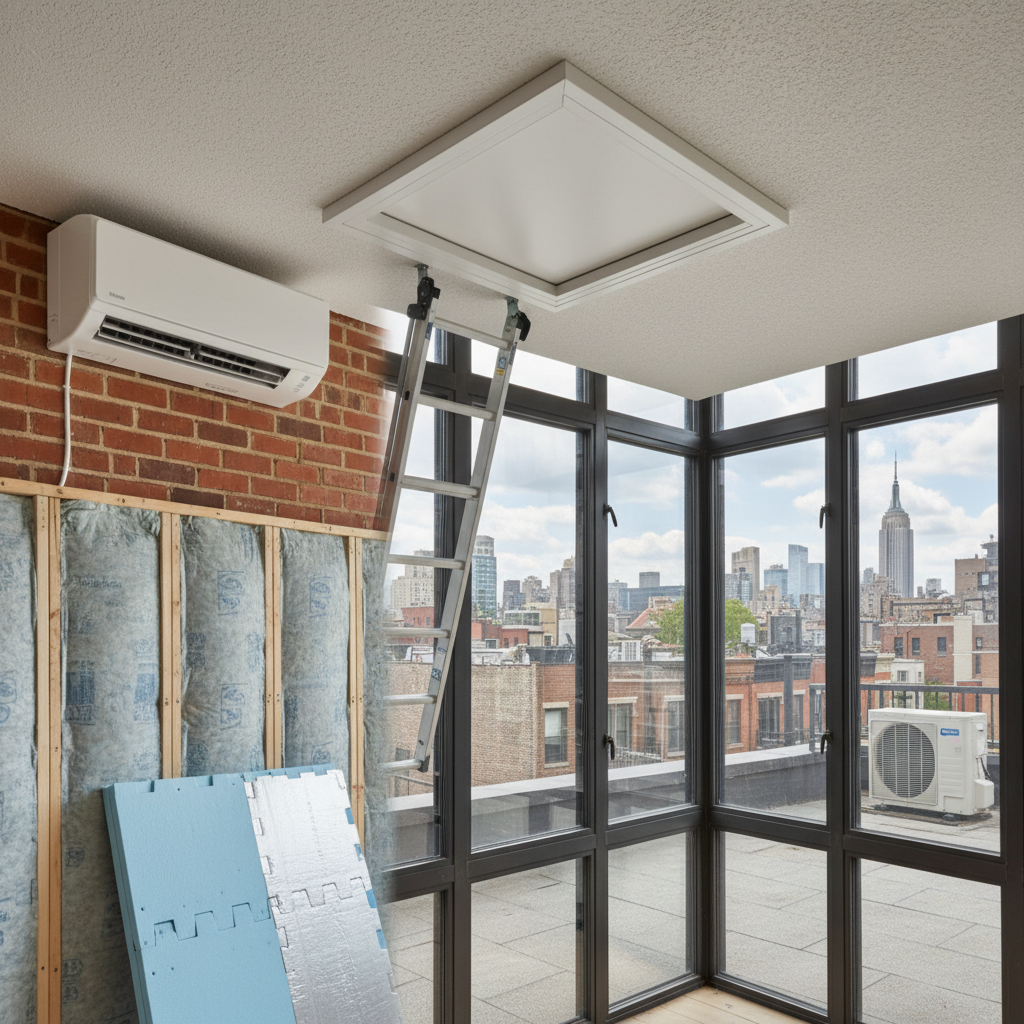
Mini splits offer independent zone control and no ductwork, which suits tight NYC renovations. They require only a small hole for refrigerant lines and condensate, reducing demolition and labor. In sunrooms, variable-speed compressors handle rapid temperature swings better than central systems. In finished attics, compact indoor heads avoid bulky duct runs and preserve floor space.
Key benefits
- Fast installation with minimal structural work
- Efficient inverter compressors with part-load savings
- Quiet indoor operation for bedrooms and living spaces
- Individual thermostats for each zone or room
Insulation Matters: Where to Invest First
Treat insulation as the first upgrade. Add cavity insulation in exterior walls, install attic insulation to a minimum R-38 where accessible, and fit thermal shades for sunroom glazing. For thin city walls, add interior continuous insulation like 1 to 2 inches of rigid foam under new wall finishes to reduce thermal bridging. Insulation lowers required mini split capacity and improves run-time efficiency.
Insulation checklist
- Attic: blow-in cellulose or fiberglass to R-38 to R-60 depending on access
- Walls: dense-packed cellulose or spray foam where cavities exist
- Floors over unconditioned spaces: R-19 or higher
- Sunroom: thermally improved glazing or insulated shades, and a sealed perimeter to reduce infiltration
Site Selection and Indoor Unit Types
Choose an indoor unit style based on room layout and finishes. Wall-mounted heads work for most additions and sunrooms. Low-profile ceiling cassettes suit open-plan spaces and finished attics where wall space is limited. Concealed ducted indoor units can preserve sightlines but reintroduce some installation complexity.
Mounting considerations
- Place indoor heads on an interior wall for even airflow and shorter line sets
- Avoid direct sunlight on the sensor or blowing air directly across doorways
- Keep indoor units at least 7 feet above the floor for comfort and maintenance access
Outdoor Unit Placement and Line Sets
Locate the outdoor compressor on a stable platform outside the building, at grade or on a bracket, with 12 to 24 inches of clearance around it. Shorter line sets reduce refrigerant charge and installation time. Plan for a straight run to the outdoor unit where possible, and allow space for future maintenance access.
NYC-specific constraints
- Roof mounting may require structural review and permits for parapet attachments
- Ground-level units in brownstone courtyards need secure mounting and noise consideration for neighbors
- Condo or co-op boards often require written approval for visible exterior equipment
Permits, Codes, and Contractor Selection in NYC
Pull required permits through the NYC Department of Buildings when the scope of work involves electrical, structural changes, or exterior units. Hire licensed HVAC contractors familiar with DOB filings, Local Law 87 requirements, and building-specific rules. Request proof of license, insurance, and recent project references in similar NYC neighborhoods.
Document checklist for contractors
- DOB permit copies and job filing number where required
- Electrical permit and proof of licensed electrician for service upgrades
- Manufacturer wiring diagrams and installation manual on site
Electrical and Condensate Requirements
Plan for a dedicated circuit sized per the equipment manual and a disconnect within sight of the outdoor unit. In many multi-story retrofits, a service panel upgrade may be necessary. For condensate, route to an approved drain or install a condensate pump sized to handle peak output and rated for continuous duty.
Practical tips
- Confirm voltage and breaker sizing with the contractor before purchase
- Install a trap and cleanout in condensate lines to prevent clogs
- Use corrosion-resistant fittings for rooftop drain connections
Ventilation and Indoor Air Quality
Tightly sealed additions and insulated attics can trap indoor pollutants. Balance the mini split with controlled ventilation using an ERV or HRV where possible, or add timed fresh air ventilation. Maintain filters on indoor units and consider MERV 8 to 11 filters for most residential needs to protect equipment and improve air quality.
Cost Ranges and Sizing Table
Costs vary with zone count, building access, and required electrical work. The table below provides common ranges for planning purposes only. Obtain site-specific quotes for final budgeting.
| Project Type | Typical Mini Split Capacity | Estimated Installation Range |
|---|---|---|
| Single-room addition or sunroom | 9,000 to 18,000 BTU | $3,000 to $5,500 |
| Finished attic bedroom or office | 9,000 to 24,000 BTU | $3,500 to $6,500 |
| Two-zone addition | 12,000 + 9,000 BTU | $5,000 to $9,000 |
Installation Steps: From Permit to Commissioning
Follow a step sequence to reduce delays: obtain permits and approvals, prepare electrical service, add insulation and air sealing, mount indoor and outdoor units, run line sets and wiring, pressure test and vacuum the system, charge refrigerant if required, and perform final commissioning and customer orientation.
Commissioning checklist
- Verify correct refrigerant charge and oil levels where applicable
- Test heating and cooling modes at minimum and maximum fan speeds
- Inspect condensate routing and verify pump operation if installed
- Confirm thermostat setpoints and zoning controls function properly
Maintenance and Longevity
Schedule annual service for cleaning coils, checking refrigerant lines, and verifying electrical connections. Replace indoor filters seasonally or as recommended by the manufacturer. Keep outdoor units clear of debris and maintain a 12 to 24 inch clearance for airflow and service access.
Common Pitfalls and How to Avoid Them
Underestimating heat gain in sunrooms, skipping insulation upgrades, and choosing undersized equipment lead to short cycling and poor comfort. Avoid oversized units that cause humidity issues. Require a load calculation and insist on manufacturer installation guidelines and warranty registration to protect long-term performance.
Selecting Products and Insulation Materials
Choose mini split systems with inverter compressors and variable fan speeds for smoother temperature control. For insulation, prefer materials with proven R-values and appropriate moisture management. Closed-cell spray foam can add structural air sealing in some projects, while rigid foam and dense-packed cellulose are good for interior upgrades without major demolition.
Final Notes for NYC Homeowners and Contractors
Treat the mini split and insulation as a system. Proper sizing, solid insulation, and correct installation deliver quiet, efficient comfort and avoid repeated service calls. Work with contractors who document permits, provide clear scopes, and leave maintenance instructions. For sunrooms and finished attics, prioritize thermal control and ventilation to maintain comfort year round.