Skip to content


Planning and first steps
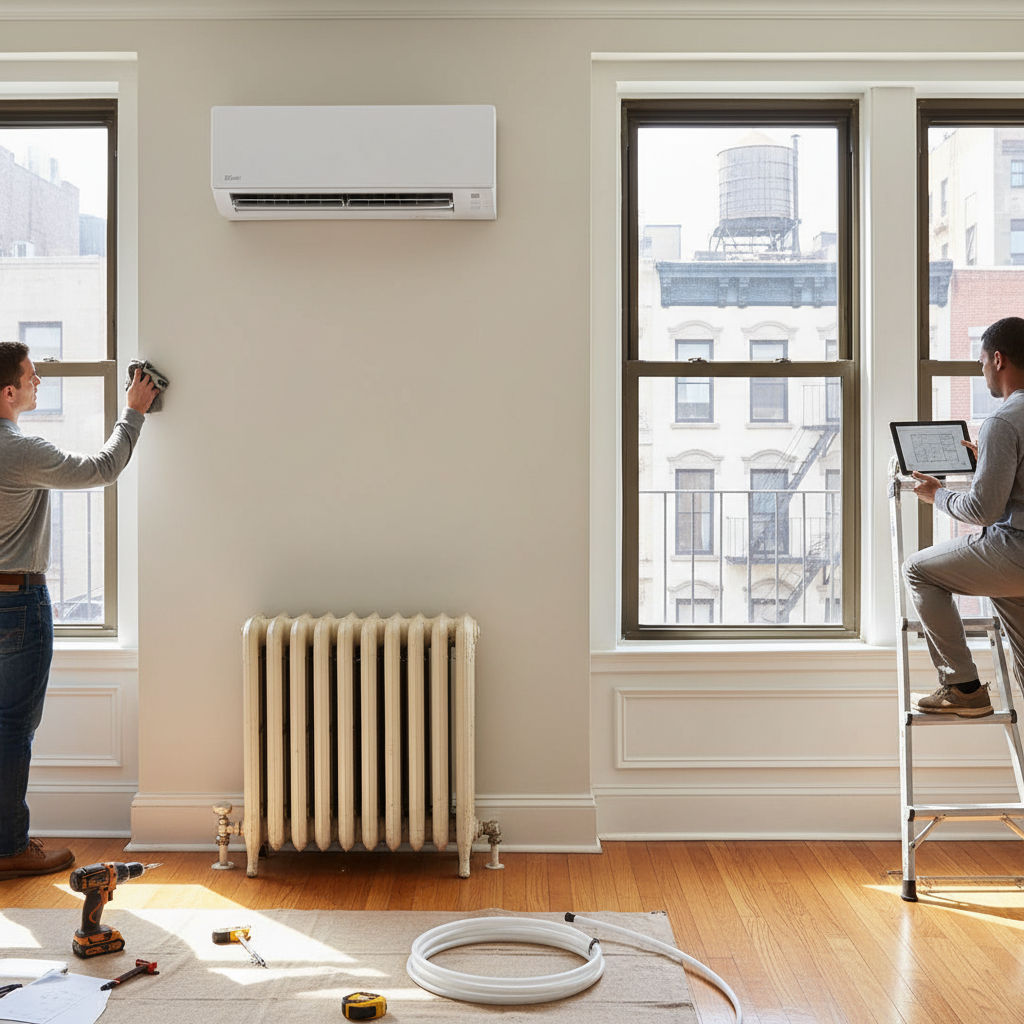
Start by measuring room square footage and wall locations, then verify whether a mini split for radiator apartment nyc can be fed by your electrical panel and where an outdoor condenser can sit. Immediate actions: measure each room, note window and radiator positions, locate the electrical panel and breaker capacity, photograph exterior wall options, and contact building management or super about exterior unit placement and any condo or coop approval requirements.
Quick site assessment checklist
- Room area in square feet and ceiling height
- Preferred indoor unit wall or ceiling placement
- Nearest electrical panel and available breakers
- Exterior space for the condenser with 12 to 24 inches clearance
- Possible route for a 3 to 6 inch wall penetration or use of an existing chase
- Coop or condo board rules and permit contacts
Choosing the right equipment
Decide between single-zone and multi-zone systems based on how many rooms will need cooling and heating. Single-zone systems serve one room with one indoor head and one outdoor condenser. Multi-zone options support two to eight indoor heads on a single outdoor compressor, reducing exterior footprint in buildings with limited space.
Sizing basics
Use simple sizing rules as a starting point: 20 to 25 BTU per square foot for standard rooms and 25 to 35 BTU per square foot for sunrooms, kitchens, or rooms with poor insulation. For accurate results, request a load calculation from a licensed HVAC contractor to account for windows, insulation, occupancy, and heat gains.
Electrical considerations
Confirm whether the apartment has a dedicated 208V or 240V circuit or if the panel needs an upgrade. Typical single-zone mini splits draw between 10 and 25 amps on a dedicated circuit. Multi-zone systems and larger compressors can require 30 to 60 amps. Action steps: have a licensed electrician inspect the panel, document available breaker spaces, and estimate wiring and breaker installation costs.
Common electrical tasks
- Install new dedicated breaker and run conduit from panel to condenser location
- Upgrade panel if service capacity is insufficient
- Install disconnect switch near the outdoor unit per code
- Obtain electrical permits where required
Permits, building approvals, and co-op rules
Most NYC boroughs require permits for HVAC modifications that involve exterior equipment, electrical work, or structural penetrations. For co-op and condo apartments, board approval often precedes permits. Practical actions: request building bylaws, prepare installation diagrams showing condenser placement and line set routing, and submit paperwork to the board and DOB when applicable.
Documents commonly required
- Detailed site plan showing condenser location and clearances
- Elevations or photos of the proposed exterior location
- Electrical load calculations and panel diagrams
- Installer license and insurance certificates
Condenser placement and line routing
Pick a condenser location that minimizes noise impact and line length. Typical condenser spots include ground level near a courtyard, rooftop, or a side wall ledge when permitted. To protect brick and masonry, route refrigerant lines through a single penetration or use an existing chase; avoid multiple small holes that can create water and pest entry points.
Wall penetration methods
- Core drilling a single 3 to 6 inch hole with professional sealing
- Using an existing utility chase or interior closet run to a roof or yard
- Installing conduit and protective sleeve for line sets through masonry
Installation workflow and timeline
Typical residential installations follow a predictable sequence that helps reduce building disruption. Follow these steps to keep the project on schedule: obtain approvals, schedule electrical work, place and secure the condenser, mount indoor head(s), drill and seal penetration, pull and connect refrigerant lines, evacuate and charge the system, and complete electrical hookups and testing.
| Task | Typical Duration |
|---|---|
| Site survey and quotes | 1 to 7 days |
| Board approval and permits | 1 to 6 weeks |
| Electrical upgrades | 1 to 3 days |
| Installation and startup | 4 to 16 hours |
Cost ranges and budgeting
Budgeting varies by zone count, equipment brand, and building complexity. Provide a budget range to prepare for typical scenarios: single-zone installs in accessible apartments with existing electrical capacity are the lowest cost. Complex installs with panel upgrades, long line sets, or condo board requirements increase cost.
| Install Type | Approximate Cost Range |
|---|---|
| Single-zone basic install | $2,500 to $5,500 |
| Single-zone with electrical upgrade | $4,500 to $8,000 |
| Multi-zone 2 to 4 heads | $7,000 to $15,000 |
| Multi-zone with complex exterior work | $12,000 to $25,000+ |
These ranges are estimates. Request written quotes from at least three licensed contractors and confirm included items such as line set length, wall penetration sealing, condenser pad or brackets, electrical work, permits, and cleanup.
Selecting an installer in NYC
Choose contractors with New York City DOB experience, licensed electricians, and insured HVAC techs. Ask for references from similar radiator-only apartments and documented experience obtaining coop or condo approvals. Actionable evaluation steps: verify license numbers, confirm insurance with building management, request a project timeline, and get a clear punch list of included services.
Questions to ask potential installers
- Have you completed installations in co-ops or condos in my neighborhood?
- Can you provide DOB permit history or inspection references?
- Who will handle electrical upgrades and permits, you or a subcontractor?
- What warranty covers labor and manufacturer parts?
Maintenance and long term ownership
Regular maintenance keeps a mini split performing well. Schedule basic tasks every 6 to 12 months: clean or replace indoor filters, inspect drain lines and condensate pans, check outdoor unit for debris, and confirm system pressures during an annual tune up. Keep records of service to support warranty claims and resale value.
When to consider full HVAC replacement
If the building has many radiator-only units with aging electrical infrastructure, a coordinated HVAC replacement strategy could deliver better efficiency and easier long term service. Replacement options range from individual ductless retrofits to centralized mechanical upgrades. For building-wide projects, involve a mechanical engineer to evaluate distribution, capacity, and code compliance.
Common pitfalls and how to avoid them
- Skipping board approval: always confirm condo or coop rules first to avoid costly removals
- Undersized equipment: get a proper load calculation rather than relying only on square footage
- Unpermitted electrical work: ensure breakers and wiring meet code and are permitted
- Poor sealing of wall penetrations: use proper sleeves and waterproofing to prevent leaks
Final steps before signing a contract
Review the written estimate for clear line items, confirm permit responsibility, set a start date, and verify cleanup and access expectations. Ask for a payment schedule tied to milestones and retain the final payment until inspections are complete and the system operates correctly.
Post installation checklist
- Signed permit and final DOB inspection where required
- Electrical certificate showing new breakers or panel changes
- Start up report with refrigerant charge and pressures
- Installer contact for warranty service and maintenance
Summary of actionable next moves
Measure rooms, document the electrical panel, photograph potential exterior condenser areas, contact building management, and request three detailed quotes from licensed NYC HVAC firms. Prioritize installers with coop and condo experience and clear permit handling to keep the project on time and compliant.