Skip to content

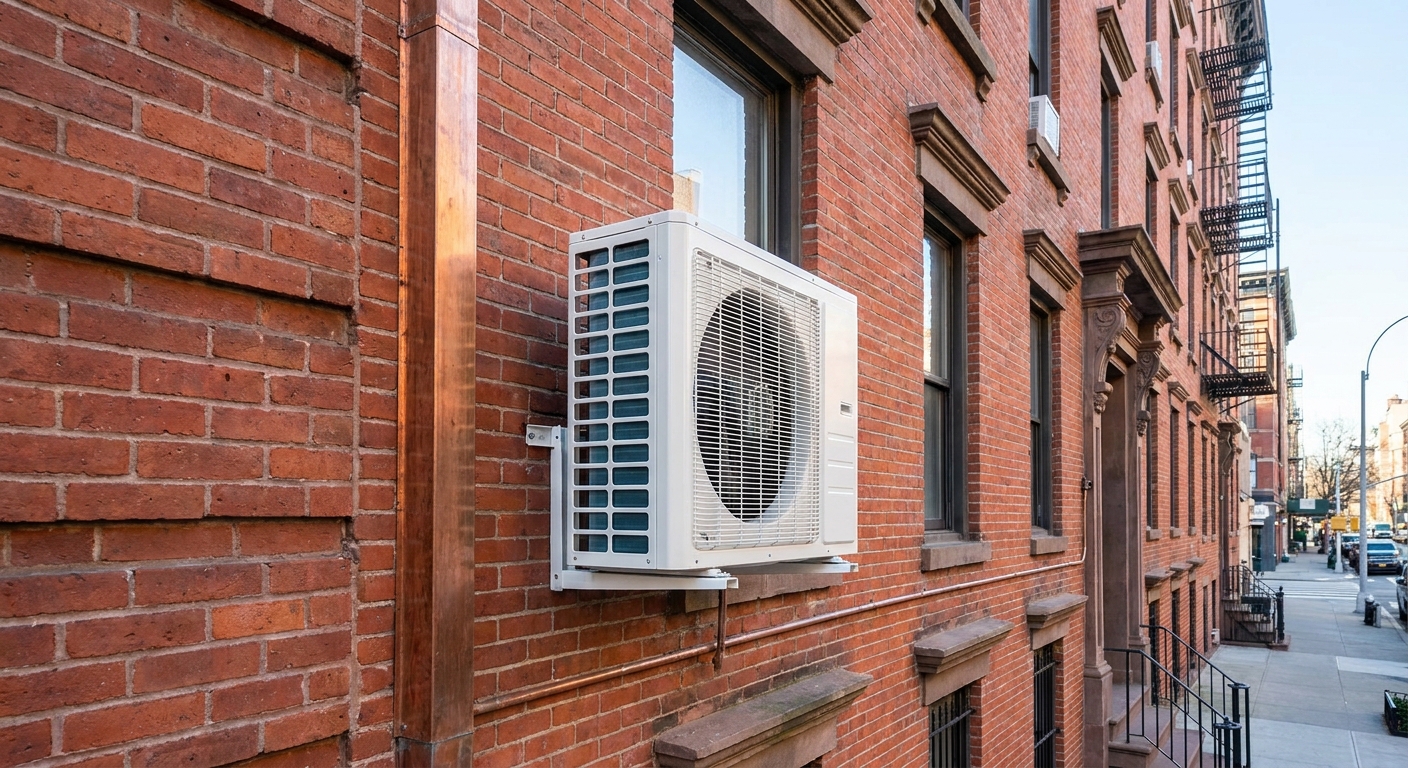
If you’re planning a ductless install, the short answer is yes: in most cases you need a mini split permit in NYC. The Department of Buildings (DOB) treats a ductless mini-split as mechanical and electrical work, not a plug-in appliance like a window unit. Because a split system adds an outdoor condenser, runs refrigerant lines through your walls, and ties into your electrical panel, it almost always requires a DOB filing and a licensed contractor to pull the permit. This guide breaks down exactly when a permit is required, how co-op, condo, and landmark rules layer on top, and what skipping the paperwork can cost you later.
Do you need a permit to install a mini-split in NYC?
For the vast majority of ductless installations across Manhattan, Brooklyn, Queens, the Bronx, and Staten Island, the answer is yes. A mini-split is a permanent mechanical system. The moment the work involves a new outdoor condenser, refrigerant penetrations through an exterior wall, core drilling, a roof or terrace mount, or new electrical circuits, the DOB expects a permit filed by a licensed professional. The narrow exceptions are simple, self-contained units that don’t alter the building’s mechanical or electrical systems — which a true ductless mini-split almost never is.
The cleanest way to think about it: if a contractor is cutting into your wall, mounting equipment on the exterior, or touching your electrical panel, plan on a permit.
When is a DOB permit required — and when is it not?
NYC draws a line between portable cooling and installed systems. Here’s how it generally shakes out:
- Permit typically required: ductless mini-splits with an outdoor condenser, multi-zone systems, roof or terrace-mounted units, any install needing core drilling for line sets, and any work that adds or modifies electrical circuits.
- Permit almost always required for larger equipment: systems above roughly 3 tons (about 36,000 BTU/hr) fall squarely into permitted mechanical work.
- Generally no work permit: a standard plug-in window air conditioner that doesn’t exceed the small-equipment threshold and doesn’t alter the structure.
Because a mini-split combines refrigerant, structural, and electrical work, it lands on the “permit required” side of that line in nearly every NYC scenario. When you’re unsure, confirm with a licensed HVAC contractor or check directly with the DOB before work begins.
Window AC vs. PTAC vs. ductless mini-split: what needs a permit?
| System | Permit usually needed? | Why |
|---|---|---|
| Plug-in window AC (small) | No | Self-contained, no structural or electrical changes |
| Through-wall / PTAC sleeve | Sometimes | New wall penetration and dedicated circuit may trigger filing |
| Single-zone ductless mini-split | Yes | Outdoor condenser, refrigerant lines, electrical tie-in |
| Multi-zone mini-split | Yes | Larger capacity, multiple penetrations, more electrical load |
| Roof / terrace-mounted condenser | Yes | Structural mounting plus mechanical and electrical work |
What about co-ops and condos?
In a co-op or condo, the DOB permit is only half the story. Your building almost certainly requires a signed alteration agreement before any work starts, plus board or managing-agent approval of your contractor’s insurance and plans. Boards often have their own rules on condenser placement, allowable work hours, line-set routing, and exterior appearance. The smart sequence is: get board approval and the alteration agreement first, then your contractor files for the DOB permit. Starting the reverse way is how projects stall. For a deeper look at board-specific requirements, see our guide on mini-split installation rules for NYC co-ops and condos.
Do landmark buildings and historic districts need extra approval?
Yes. If your home is an individual landmark or sits within a designated historic district, you’ll likely need approval from the Landmarks Preservation Commission (LPC) in addition to the DOB permit. The LPC cares most about visibility: a condenser tucked into a rear yard or a non-visible side of the building is far easier to approve than equipment facing the street. Brownstone and pre-war owners should plan extra lead time for LPC review. We cover the visibility rules and placement strategies in our post on installing mini-splits in NYC landmark and historic districts.
Who pulls the permit, and what does the process involve?
You don’t file a mini-split permit as a homeowner. A licensed contractor — and, depending on scope, a registered design professional — handles it. The typical path looks like this:
- Assessment: the contractor sizes the system, confirms electrical capacity, and plans condenser placement and line-set routing.
- Filing: plans are submitted to the DOB, often through the NYC DOB NOW portal, by the licensed professional.
- Approvals: any co-op/condo alteration agreement and LPC sign-off are secured in parallel.
- Permit issued: work begins only after the permit is approved.
- Inspection & close-out: the job is inspected and the permit signed off so it’s documented for the building’s records and any future sale.
Electrical capacity is a common surprise step — older NYC homes sometimes need a panel upgrade or a dedicated circuit, which Con Edison and your electrician coordinate. For a full walkthrough of what installation day looks like, read our NYC mini-split installation process guide.
What happens if you skip the permit?
Skipping the permit can feel faster and cheaper, but it shifts real risk onto you. Unpermitted mechanical work can trigger DOB violations and penalties, complicate your homeowner’s insurance if there’s ever a claim, and create problems when you sell or refinance — buyers’ attorneys and lenders flag open or missing permits. In a co-op or condo, unauthorized work can also put you in breach of your proprietary lease or bylaws. A properly permitted install protects the value of your home and keeps the paperwork clean for the next owner.
How AirSync handles permits for NYC mini-split installs
At AirSync, permitting is built into the job, not treated as an afterthought. As a local NYC HVAC company, we handle the DOB filing, coordinate co-op and condo alteration agreements, and navigate LPC approvals for landmark and historic-district properties so the system is installed legally and documented from day one. If you’re weighing a ductless project and want to understand exactly what your building requires, reach out for a no-pressure assessment — we’ll map out the permit path before any work begins.
Permit rules and thresholds can change and vary by building. Always confirm current requirements with a licensed contractor or the NYC Department of Buildings before starting work.