Skip to content

How do you prepare for mini split installation day in NYC?
Preparing for mini split installation day comes down to three things: clearing access to the indoor and outdoor unit locations, confirming the building and electrical details ahead of time, and making sure someone with authority is home for the full window. A little prep the day before turns a NYC install into a smooth few hours instead of a stalled appointment, especially in apartments and brownstones where access and parking are tight.
This checklist walks through what to handle before the crew arrives, what happens during a typical install, and the NYC-specific details that trip people up.
What should you do the day before installation?
- Clear the indoor unit walls: move furniture, art, and shelving at least three feet from where each indoor head will mount.
- Clear the outdoor unit path: make sure the crew can reach the condenser location, whether that is a backyard, roof, terrace, or a wall bracket.
- Confirm parking or loading: in much of NYC, reserve a spot or know the loading rules so the crew is not circling the block with equipment.
- Protect floors and pathways: clear a route from the entrance to each work area.
- Secure pets in a closed room away from the work.
What does the installer need from you?
Have the building and electrical details ready so the crew is not waiting on information. Most delays in NYC are paperwork and access, not the install itself.
- Any board or management approval and the building’s certificate of insurance requirements, if you are in a co-op or condo.
- Access to your electrical panel and confirmation there is capacity for the new circuit.
- The agreed indoor head and outdoor condenser locations, ideally marked.
- A contact who can make decisions on the spot if something needs adjusting.
How long does a mini split installation take?
A single-zone mini split typically installs in four to eight hours, while a multi-zone system can take one to two days depending on the number of indoor heads and the distance to the condenser. NYC buildings add time when the crew has to route line sets through thick masonry walls, coordinate roof or terrace access, or work around a tight electrical panel.
| System | Typical time | What drives it longer |
|---|---|---|
| Single zone | 4-8 hours | Long line set, masonry walls |
| Multi zone (2-4 heads) | 1-2 days | More heads, roof condenser access |
| Whole home | 2-3 days | Electrical upgrades, multiple floors |
What happens during the install?
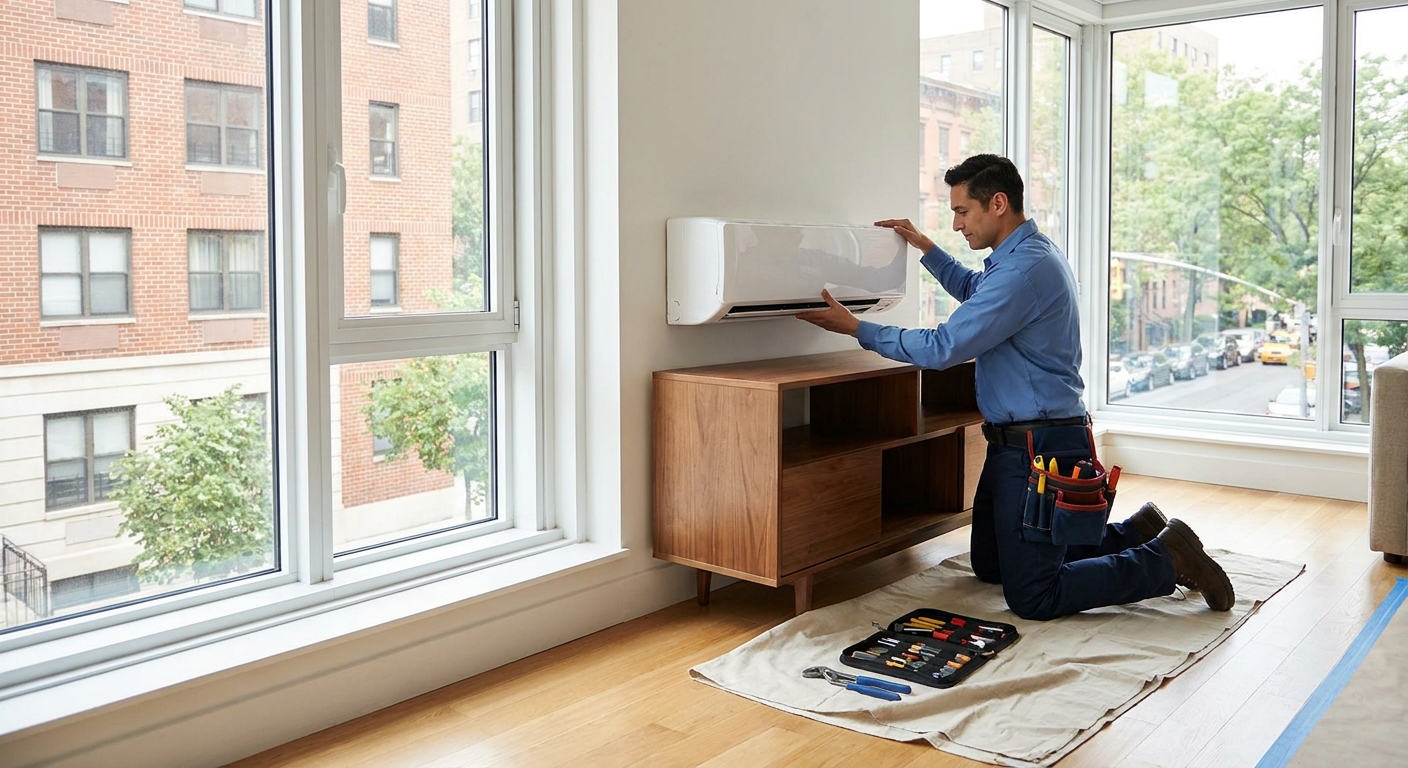
The crew mounts the indoor heads, places the outdoor condenser, connects the refrigerant line set and electrical, drills a small penetration for the lines, then vacuums and charges the system before testing. Expect some drilling noise and brief access to multiple rooms. A good crew protects surfaces, cleans up, and walks you through the remote and basic maintenance before they leave.
What NYC-specific details should you confirm first?
NYC installs hinge on building rules and city filings. Mini split systems over 36,000 BTU/hr generally require a NYC Department of Buildings permit, and new outdoor condensers, roof or terrace placements, and refrigerant penetrations can trigger filings as well. If you are in a co-op or condo, your alteration agreement and board approval need to be settled before installation day, not on it. Confirm these with your installer in advance so the appointment is for installing, not for discovering paperwork.
What should you do right after installation?
Run each zone in both cooling and heating to confirm it responds, set up the Wi-Fi or smart controls if your system has them, and ask the crew where the condensate drains and how to clean the washable filters. Filters should be rinsed roughly once a month during heavy use. Keep the model and serial numbers and the warranty paperwork in one place.
Ready to schedule?
If you are planning a mini split for a NYC apartment, brownstone, or whole home, AirSync handles the install and the city filing details so the day goes smoothly. Get in touch for a quote and we will walk you through the access and approval steps for your building.