Skip to content

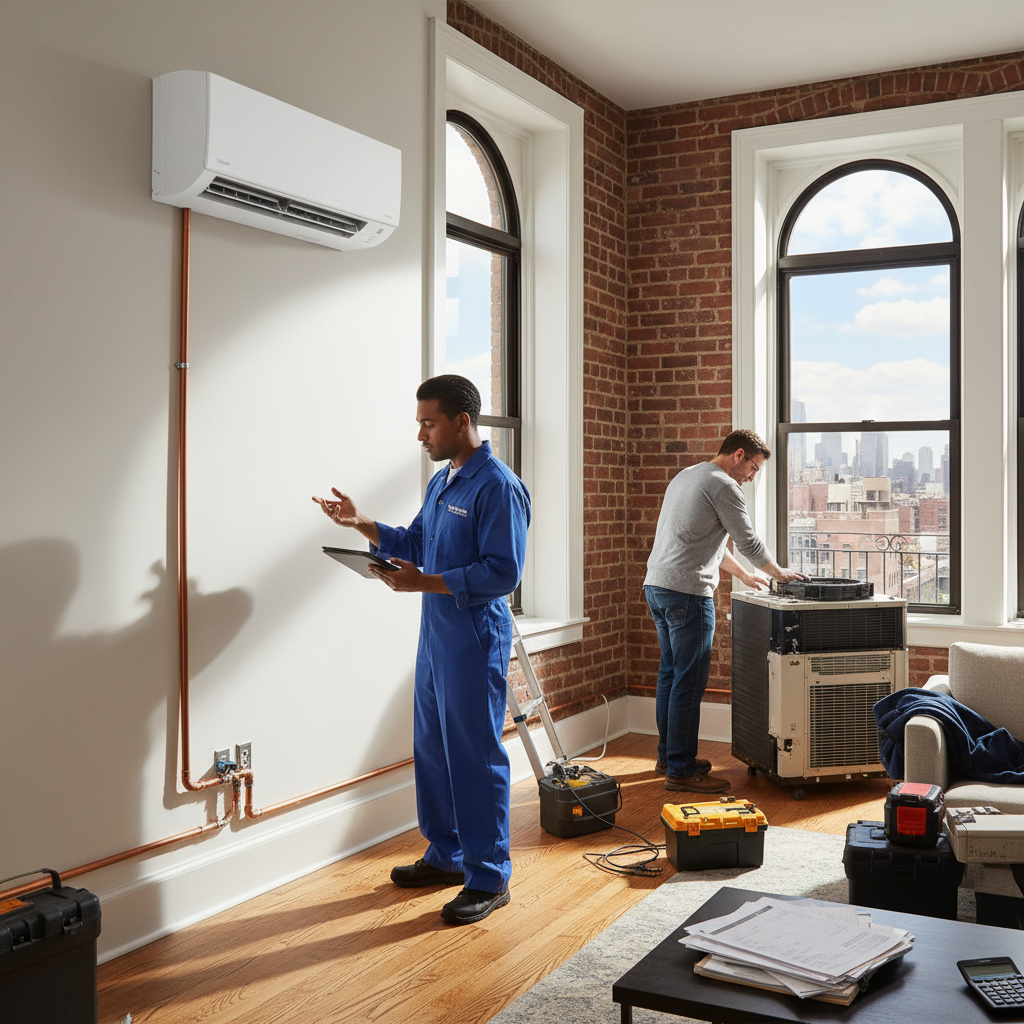
Start practical steps to estimate cost to replace hvac with mini splits ny
Measure each room you want conditioned, count how many zones you need, and get three written estimates from licensed installers that break out equipment, labor, and permits. Include the exact model names, line-set lengths, and whether attic or wall penetrations are required so you can compare apples to apples. That core information will make the cost to replace hvac with mini splits ny estimates reliable and actionable.
Why mini splits are considered for HVAC replacement
Mini splits isolate heating and cooling loads by zone, which lets homeowners target comfort where it matters and avoid conditioning unused space. They convert a single central system into multi-zone units with small indoor heads and one or more outdoor compressors. That design affects equipment cost, installation complexity, and permitting when compared to central forced-air replacement.
Typical cost components
- Equipment: Indoor heads, outdoor compressor, branch boxes for multi-split systems, remote controls, and mounting hardware.
- Installation labor: Running refrigerant lines, wiring, condensate drains, mounting indoor units, and commissioning the system.
- Electrical upgrades: Service panel capacity, dedicated circuits, and surge protection if required.
- Structural work: Holes through exterior walls, roof penetration, or minor carpentry for wall sleeves and mounting brackets.
- Permits and inspections: Local building permits, HVAC permits, and final inspection fees required in many New York municipalities.
- Disposal: Safe removal and disposal of old HVAC equipment, refrigerants, and associated ductwork if removed.
Price ranges by system type and home size
Here are broad budget ranges to help plan. Use them only as a starting point; specific quotes will vary.
| System type | Typical total cost | When used |
|---|---|---|
| Single-zone mini split | $2,500 to $5,000 | Small room, office, or single addition |
| Multi-zone (2-3 heads) | $6,000 to $12,000 | Small apartments, small homes with targeted zones |
| Whole-home multi-zone (4-8 heads) | $12,000 to $30,000+ | Larger homes replacing central HVAC |
| High-efficiency cold-climate models | +10 to 30 percent | Requires better-rated compressors for NY winters |
How New York location affects pricing
City vs upstate costs differ. Urban installations often face higher labor rates, tougher access for cranes or lifts, and additional building approvals in co-ops and condos. Upstate and suburban projects may face longer travel charges for specialized installers. Local code requirements can add inspection fees or require licensed trades for electrical work, which raises labor totals.
Permit and inspection considerations
Most municipalities in New York require a permit for refrigerant-containing HVAC equipment and for electrical changes. Ask your installer to include permit fees and the cost of a licensed electrician in the estimate. Some jurisdictions require engineer-stamped drawings for multi-family buildings or for structural rooftop mounts. Factor in two to six weeks for permit approval in busy municipalities.
Energy savings and operating costs
Mini splits typically have higher seasonal efficiency ratings than older central systems, which can reduce monthly energy bills. Savings depend on usage patterns, local electricity rates, and system sizing. Run a comparison using recent utility bills and an installer-provided load calculation rather than relying on generic percentages.
Incentives, rebates, and tax credits
Federal, state, and utility incentives can offset upfront cost. The Inflation Reduction Act and specific New York programs may offer credits or rebates for high-efficiency heat pump installations. Check utilities for point-of-sale rebates and the state energy office for qualifying programs. Have the installer provide incentive paperwork and confirm eligibility before purchase.
Financing and payment options
Popular routes include:
- Home equity or HELOC: Lower interest rates for homeowners with available equity.
- Personal loans: Fixed monthly payments without secured property lien.
- Manufacturer or contractor financing: Promotional rates or deferred payments; read terms carefully for deferred interest clauses.
- Energy loan programs: Some municipalities or state programs provide low-interest loans tied to energy improvements.
Ask for an amortization schedule and total interest paid so you can compare financing against cash purchase considering available incentives.
Choosing the right installer
Look for a New York-licensed HVAC contractor with specific mini split experience. Verify liability and workers compensation insurance, read recent customer reviews, and request references for similar installations. Confirm the installation warranty and what it covers: labor, parts, and refrigerant leaks should be explicit. An installation checklist from the contractor should include load calculations, refrigerant line specs, electrical scope, and a commissioning report.
Installation timeline and milestones
- Site survey and load calculation: 1 week
- Permit application and approval: 2 to 6 weeks depending on locality
- Equipment lead time: 1 to 4 weeks
- Installation day(s): 1 to 5 days depending on scope
- Inspection and commissioning: 1 to 2 weeks after completion
Plan for seasonal demand spikes. Late summer and early fall often have longer lead times because installers are busiest.
Common cost drivers and how to control them
- Over-sizing or under-sizing. Use a proper Manual J load calculation rather than rules of thumb.
- Number of zones. Group rooms logically to minimize heads while maintaining comfort.
- Long refrigerant runs. Shorter line runs reduce both material and labor cost.
- Electrical panel upgrades. Confirm panel capacity early to avoid surprise upgrade costs.
- Exterior work. Brick, stone, or masonry penetrations add cost versus vinyl or wood siding.
Sample checklist to get an accurate quote
- Exact square footage and ceiling heights of conditioned rooms
- Number and location of interior walls for head placement
- Photos of attic, exterior walls, and the outdoor compressor location
- Electrical panel photos and circuit details
- Preferred installation timeline and any access constraints
Frequently asked questions
Will mini splits heat well in New York winters? Select cold-climate rated models and size the system for heating loads; some homes may still require a backup heat source.
How long do mini splits last? Well-maintained systems often operate reliably for 15 to 20 years; compressor life and refrigerant handling affect service needs.
Can mini splits replace ducted central HVAC completely? Yes for many homes, but whole-home replacement depends on layout, zoning complexity, and whether basements or attics need conditioning.
Final budgeting tips
Collect detailed, itemized bids and compare line items rather than lump sums. Reserve a contingency of 10 to 20 percent for unexpected electrical or structural work. Factor incentives and realistic financing costs into the total ownership picture. With careful planning and qualified installation, mini splits can be a cost-effective replacement for older central systems, especially when focusing on targeted comfort and long-term operating savings.