Skip to content

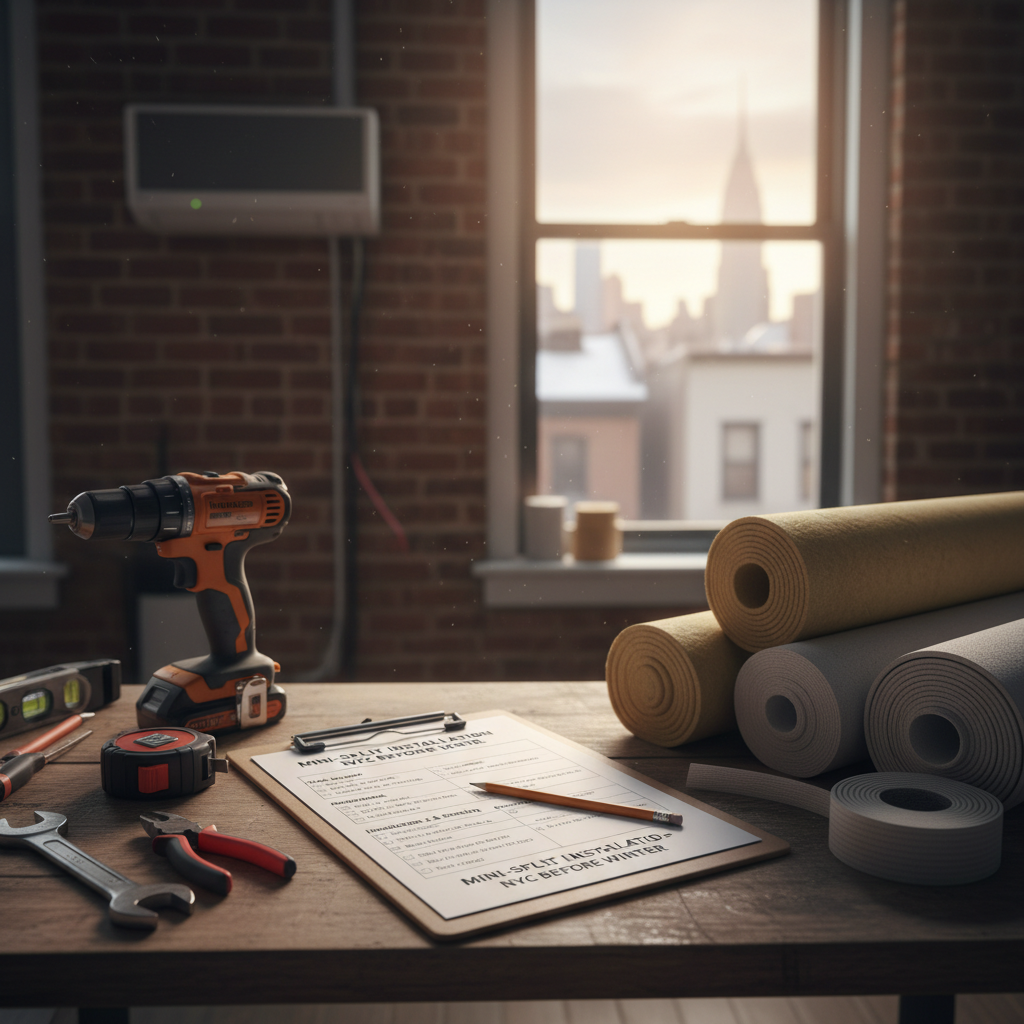
Mini Split Installation Checklist for New York Homeowners Before Winter
Begin by contacting a licensed installer and booking an on-site assessment as the first item on the mini split installation checklist nyc winter. Have an exterior access point cleared, an electrical circuit option sketched, and a basic timeline ready so the installer can create a firm proposal during the visit.
1. On-site assessment and measurements
Action steps for the assessment
- Ask the installer to measure each room for heating load using room dimensions, ceiling height, window type, and exposure.
- Request identification of ideal indoor head locations to avoid airflow obstructions and maintain clearance from shelves, curtains, and light fixtures.
- Confirm where the outdoor condenser can sit with level ground, adequate air intake clearance, and minimal road or sidewalk interference.
2. Electrical readiness
Key items to prepare
- Determine whether the property has a dedicated 240V or 208V circuit capacity available near the proposed outdoor unit. If not, schedule an electrician to add one.
- Document the main panel capacity and any subpanels. Older panels may need upgrades before new equipment can be energized.
- Plan the conduit route from indoor heads to the outdoor unit and note any challenging wall assemblies or long runs that could affect refrigerant line length.
3. Building access and worksite logistics
Practical site preparations
- Clear a 5 to 10 foot work area near the intended outdoor unit location to allow for crane access or ladder staging if an upper-floor install is required.
- Ensure safe interior access to electrical panels and the rooms where indoor heads will mount. Remove wall hangings and small furniture near planned mount points.
- Confirm elevator reservations or parking permits for contractor vehicles in multiunit buildings to avoid on-day delays.
4. Permits and building regulations
Permit and code checklist
- Contact the local building department or consult your building manager to learn required permits and inspection steps for ductless systems.
- Collect building-specific rules like facade restrictions, condenser locations, and permitted noise levels. High-rise facades and landmark properties often have extra requirements.
- Keep copies of any filed permit and inspection reports. Share permit numbers with your installer so inspections can be scheduled quickly.
5. Insulation and air-sealing tasks tied to efficiency
Upgrade priorities before installation
- Seal gaps around window frames, baseboards, and cable penetrations with caulk or foam to reduce infiltration.
- Add or top-up attic insulation where accessible. A common target in NYC homes is R-38 to R-49 for attics, depending on roof design.
- Check refrigerant line routings through exterior walls and seal any resulting wall cavities after installer penetration to maintain thermal barriers.
6. Equipment selection and sizing considerations
Decision points to resolve before ordering
- Choose system capacity based on measured room heat-loss, not rule-of-thumb sizing. Under-sizing leads to poor comfort; oversizing creates short cycles and inefficiency.
- Decide on single-zone versus multi-zone models depending on how many rooms will have independent control.
- Confirm noise ratings and energy efficiency metrics. Look for SEER and HSPF values on manufacturer specs and compare indoor head sound levels in decibels.
7. HVAC replacement and compatibility checks
When replacing an existing system
- Note if you are swapping a gas furnace or older heat pump; compatibility may affect refrigerant lines and electrical requirements.
- Plan for disposal of old equipment and request a removal quote from the contractor. Some municipalities require certified disposal or recycling for older refrigerant lines and units.
- Check warranties and transfer policies when replacing major components so future claims remain valid.
8. Contractor selection and quotes
How to evaluate proposals
- Obtain at least three written quotes that list equipment models, line lengths, electrical work, permits, and labor hours separately.
- Confirm the installer holds a valid state license and carries general liability and workers compensation insurance. Ask for certificate copies.
- Check local references and recent project photos for similar NYC installations to verify workmanship in tight urban conditions.
9. Scheduling and winter timing
Minimize winter delays
- Book installation dates well before sustained freezing weather. Installers often fill fast in late fall and early winter; reserve a slot at least 4 to 6 weeks out.
- Plan phased work if insulation upgrades or panel upgrades are required first. Sequence electrical and envelope improvements ahead of final equipment delivery.
- Confirm contingency plans for weather delays and ask whether the contractor needs a clear access path for crane or ladder work on the scheduled day.
10. Day-of-install checklist
Make the installation day efficient
- Have a designated contact to meet the crew and confirm unit placements, drain routing, and thermostat locations.
- Ensure power to the electrical panel is accessible and that pets and children are kept away from work areas.
- Take a photo of the final indoor head locations and outdoor unit placement for future reference and warranty claims.
11. Post-install verification and maintenance plan
Final checks to request
- Ask the installer to demonstrate controls and walk through basic troubleshooting steps like filter replacement and draining lines.
- Confirm the contractor will perform the required startup paperwork, safety checks, and any municipal inspections tied to the permit.
- Set a six-month and annual maintenance reminder for filter replacement, condensate check, and electrical terminal inspections.
Quick reference checklist table
| Task | Who | When |
|---|---|---|
| On-site assessment and measurements | Licensed installer | Before quote |
| Electrical panel and circuit upgrade | Licensed electrician | Before install |
| Insulation and air sealing | Contractor/homeowner | Before install |
| Permits and inspections | Installer/homeowner | Before and after install |
| Final startup and demo | Installer | Day of install |
Cost considerations and financing
Budget items to include
- Separate equipment, labor, electrical, permit fees, and insulation into line items when comparing bids.
- Ask about available rebates or tax incentives for efficient models; utilities and state programs occasionally offer credits for heat pump installations.
- Consider financing options if multiple home upgrades are planned at once to spread payments and tackle envelope work with the installation.
Winter-specific risks and mitigation
Protect the installation
- Confirm the outdoor unit will be mounted on a vibration pad or bracket above expected snow accumulation and away from continuous runoff paths.
- Install a condensate routing plan that avoids freezing; consider an insulated condensate pump for runs through unheated spaces.
- Plan for seasonal maintenance visits before deep winter to verify refrigerant charge and defrost operation.
Final recommendations
Follow this operational checklist to reduce surprises and deliver a working system before deep cold sets in. Prioritize site access, electrical readiness, and insulation improvements so the installation proceeds smoothly and the new system delivers reliable comfort throughout the season.