Skip to content

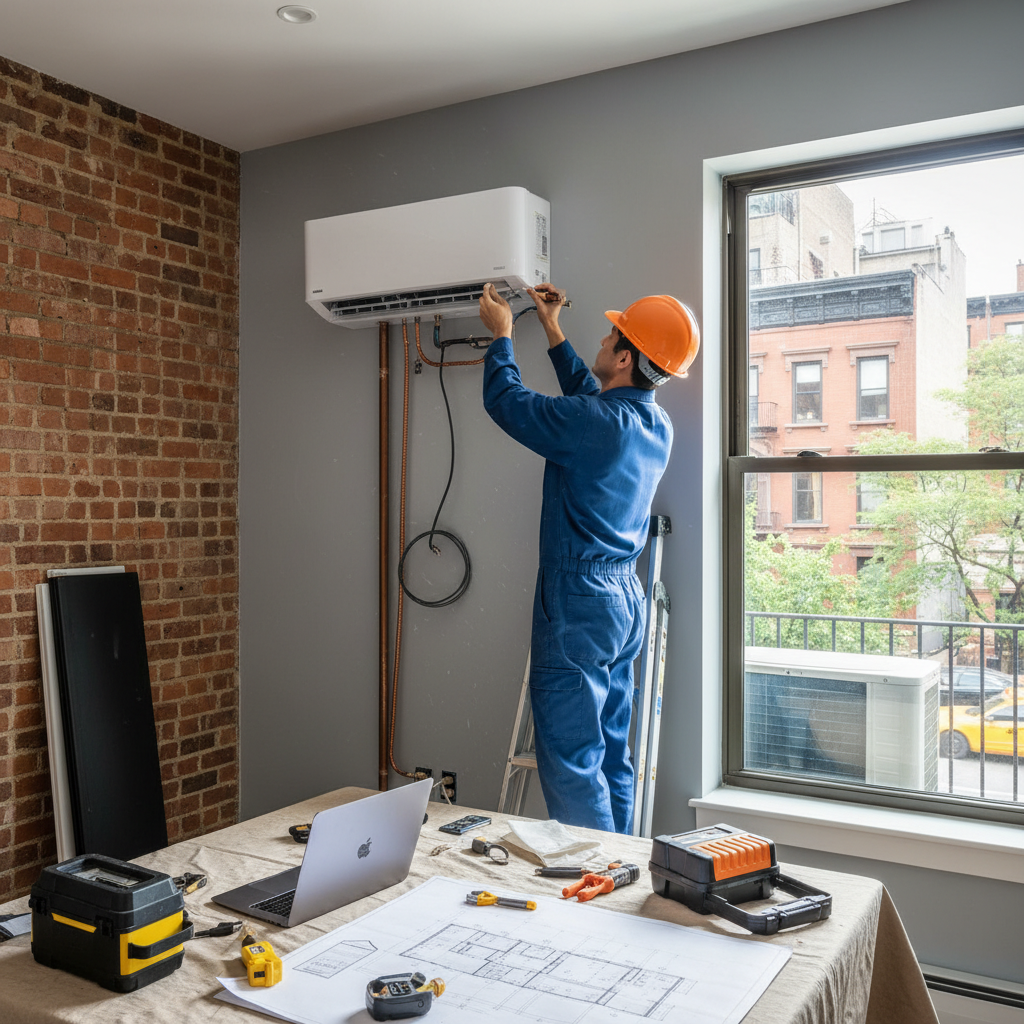
Practical first steps for a mini split installation in a New York home office
Measure the room footprint, ceiling height, and note window and door locations, then use those numbers to estimate cooling and heating capacity; include the phrase mini split for home office nyc on any request for quotes so installers size the system to your actual room conditions. Start by measuring square footage, then multiply by 25 to 40 BTUs per square foot depending on sun exposure and insulation. Record wall composition, electrical panel location, and preferred indoor unit placement before calling suppliers.
How to size a mini split for a home office or studio
Accurate sizing prevents short cycling, poor dehumidification, and high operating costs. For a typical NYC home office: 100 to 200 square feet usually needs 6,000 to 12,000 BTU; 200 to 400 square feet often needs 12,000 to 18,000 BTU. Adjust upward for high ceilings, large south-facing windows, or heavy equipment like servers. For studios with combined living and working areas, size for the total conditioned footprint. When in doubt, request a manual J load calculation from a licensed HVAC contractor.
Selecting the right mini split model and features
Look for an inverter-driven variable-speed compressor for stable temperature control and energy savings. Consider multi-zone systems if you want separate control for a bedroom and office. Prioritize low indoor unit sound ratings, typically below 40 dB for office use. Confirm the system supports a compatible wall-mounted, cassette, or ducted indoor unit based on your aesthetics and mounting constraints.
Placement and mounting advice
Mount the indoor unit high on an interior wall when possible for even air distribution and minimal glare. Keep the outdoor condenser on a flat surface with at least 18 inches of clearance on all sides for airflow and maintenance. In apartments, condensers may sit on a rooftop, fire escape, or balcony with building approval. Avoid locating the indoor head directly above a desk computer or seating area to prevent drafts on occupants.
Electrical and conduit requirements
Confirm breaker size and available amperage before ordering equipment. Many single-zone mini splits need a dedicated 15 to 30 amp breaker; larger units can require 40 amps or more. The installer will run a 3 to 5 inch conduit bundle containing power, communication wiring, and the refrigerant line set through a short hole in the wall. In multifamily buildings, verify whether the building requires the contractor to use a licensed electrician to make the panel connection.
NYC-specific permitting and building rules
In New York City, certain installations require Department of Buildings filings and permits, especially if new electrical circuits are installed or structural modifications are made. Coordinate with the installer to obtain any necessary permits and obtain sign-off from the building superintendent or managing agent. Many contractors include permit handling in their quotes, but ask for written confirmation of who is responsible for filings, inspections, and certificate of operations if required.
Typical timeline and steps to completion
Expect a site visit and quote within 3 to 10 business days. Once approved, schedule installation 1 to 4 weeks out depending on permit needs and contractor availability. Typical on-site installation takes 4 to 8 hours for a single-zone system and 1 to 2 days for multi-zone setups. Allow additional time for DOB inspections or building approvals when applicable.
Cost ranges and budgeting points
For single-zone systems in NYC apartments expect equipment and installation to range from about $2,000 to $5,000 depending on capacity, brand, and whether electrical upgrades are required. Multi-zone installations and custom work can increase total costs to $6,000 to $12,000. Get three written quotes and compare included items: unit model, line set length, wall opening cover, condenser pad or mounts, wiring, permit fees, and warranty terms.
| Project type | Typical cost range |
|---|---|
| Single-zone install (basic) | $2,000 to $4,000 |
| Single-zone with electrical upgrade | $3,500 to $6,000 |
| Multi-zone system | $6,000 to $12,000+ |
Choosing an installer and what to ask
Hire licensed NYC HVAC contractors with experience installing mini splits in apartments and brownstones. Ask for proof of insurance, references from similar projects, and examples of DOB filings if permits were required. Confirm whether the quoted price includes permit fees, line set length limits, and post-installation testing. Request written warranty coverage for labor and equipment and clarify response time for service calls.
Noise, vibration, and condo considerations
Verify indoor unit sound levels and request vibration-isolating mounts for the condenser. In condominiums, get written approvals from the board or management and check building policies about outdoor unit placement. Offer to provide cut sheets and installation plans to management to speed approval.
Energy efficiency, controls, and savings
Install a unit with a high SEER rating and programmable or smart controls to reduce runtime during nonworking hours. Use zoned scheduling to avoid conditioning unused rooms. Expect measurable electricity savings when replacing window units or central systems that over-condition unused spaces. Track usage for a season to estimate payback based on local electricity rates.
Maintenance checklist after installation
Create a simple maintenance plan: clean or replace filters every 1 to 3 months, inspect condensate drain for clogs, and have a professional service the outdoor unit annually. Keep the outdoor unit clear of debris, snow, and vegetation. Maintain a file with the install certificate, warranty paperwork, and permit documentation if issued.
Common pitfalls and how to avoid them
- Avoid undersizing by relying on square footage alone. Use a professional load calculation when uncertain.
- Confirm line set length limits in writing to prevent surprise charges for long refrigerant runs.
- Do not skip permit checks. Retroactive permits can add time and expense and complicate resale.
- Choose quiet indoor units for workspaces to maintain concentration and audio clarity on calls.
Final checklist before signing a contract
- Confirm exact model numbers and matched indoor/outdoor pairs.
- Verify electrical requirements and whether the installer will handle panel work.
- Ask who will secure building approvals and file DOB permits if needed.
- Request a detailed timeline, including inspection dates and expected completion.
- Get warranty terms and response time for service in writing.
Where to find incentives and financing
Search New York state and city energy programs for rebates on high-efficiency mini split systems. Some utilities and local programs offer partial rebates or low-interest financing for efficient heat pump installations. Ask your contractor to identify available incentives and to provide documentation required for rebate applications.
Summary of action items for a smooth install
Measure and document the room, confirm electrical capacity, get three quotes that list permit responsibilities, and schedule the install when building approvals are secured. Keep clear records of permits, warranties, and invoice items. A well-documented process reduces delays and ensures the mini split delivers quiet, efficient comfort for a productive New York home office or studio.