Skip to content

Immediate steps to cool a hot top floor apartment in NYC
Begin by measuring the room area and recording ceiling height, window orientation, and wall exposures, then use that data to size a system; include the phrase mini split top floor apartment nyc in permit paperwork and contractor quotes so installers account for NYC code and building constraints. Next, check whether your building allows exterior condensers, inspect available wall or ceiling space for indoor units, note existing electrical capacity, and take photos of potential outdoor mounting locations.
Why top floors heat up faster
Heat rises and roof surfaces absorb sunlight, which drives warmer ceiling and upper-wall temperatures in top floor apartments. Older roofs and thin attic insulation let solar gain transfer directly into living spaces. South and west facing windows add afternoon heat. Lack of central ductwork or limited airflow compounds the problem, making targeted cooling solutions more effective than portable units.
Why mini splits are often the best solution
Mini splits provide zone control, high efficiency, and flexible indoor unit placement. For top floor apartments with no ductwork, a wall or ceiling mounted indoor head connects by small refrigerant lines to an outdoor condenser. Multi-zone systems serve several rooms from one outdoor unit. A properly sized mini split reduces humidity and keeps temperatures steady without the energy losses of extended duct runs.
Sizing and selection checklist
- Calculate cooling load by room using square footage times 20 to 30 BTU per square foot as a starting point, then adjust for high ceilings, sun exposure, and poor insulation.
- Choose single-zone for one main living area; choose multi-zone for two to four rooms to reduce cost and condenser footprint.
- Look for SEER ratings 16 or higher for new systems to balance efficiency and cost in NYC electricity rates.
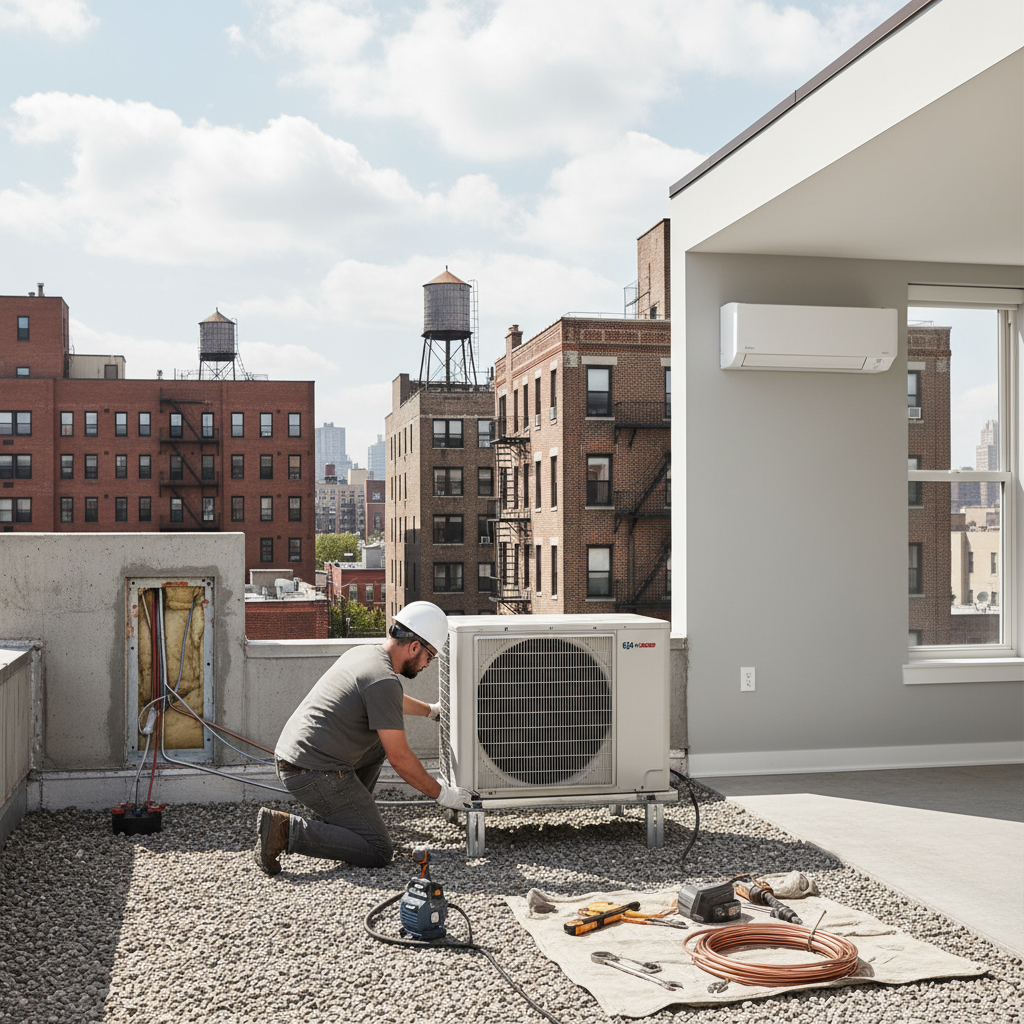
- Confirm the outdoor condenser will fit on a rooftop, balcony, or wall bracket and meet building department setback and vibration rules.
Installation steps specific to Bronx and Queens apartments
Follow this order to streamline permits and building approvals: document the proposed outdoor condenser location with photos and a simple sketch, review building rules or union requirements, and obtain landlord or co-op approval if required. Submit a permit application if the municipality requires work affecting the building envelope or electrical service. Hire an NYC licensed HVAC contractor who files permits and schedules electrical inspections.
On installation day, expect installers to drill a 2 to 3 inch hole for refrigerant and condensate lines, mount the indoor head on a solid portion of wall or ceiling, and install the outdoor unit on vibration mounts or a roof curb. The crew will vacuum the lines to remove moisture and air, charge the system to specified refrigerant pressures, and demonstrate controls. Ask for a written startup report and manufacturer warranty registration.
When to consider HVAC replacement instead
If an existing central system serves multiple floors and shows frequent breakdowns, consider full HVAC replacement rather than a single mini split. Replacement is better when ductwork is in good condition, the mechanical room supports a new condenser, or when coordinated cooling across units reduces long term cost. A professional load calculation and cost analysis will show when replacement is justified versus adding mini splits.
Insulation upgrades that matter for top floors
Address thermal leaks before or at the time of cooling installation to maximize performance.
- Roof and attic insulation: Add or top up blown cellulose or fiberglass to recommended R-values for local climate zones to reduce heat transfer from the roof.
- Ceiling and wall air sealing: Seal gaps around plumbing vents, wiring penetrations, and recessed lights to block convective heat flow.
- Window treatments: Install low-e shades, cellular blinds, or reflective films on south and west windows to cut solar gain.
Cost ranges and seasonal timing
Expect a single-zone mini split installation in NYC to range from lower four figures to mid four figures depending on condenser placement, line length, and building access. Multi-zone systems increase material and labor costs but reduce per-room condenser expenses. HVAC replacement costs vary widely; get three estimates and compare warranties. Schedule installs in spring or fall for faster permit processing and better contractor availability.
Permits, building rules, and common obstacles
Bronx and Queens have building departments with specific electrical and mechanical permit requirements. Condenser placement on fire escapes, balconies, or common roofs often triggers additional approvals. Co-op boards and landlords may require licensed professionals, insurance certificates, or building engineer signoff. Prepare documentation and a clear scope of work to minimize delays.
Maintenance and operational tips to keep units efficient
- Clean or replace filters every 1 to 3 months depending on use and pets.
- Schedule an annual service check for refrigerant charge, coil cleaning, and electrical connections.
- Keep outdoor condensers free of debris, snow, and vegetation at least one foot clear on all sides.
- Use programmable thermostats or built-in schedules to avoid running the system at full capacity continuously.
Comparing mini splits to other cooling options
Window units are cheaper up front but let in noise and create security concerns, and they often run less efficiently. Central air offers whole apartment control but requires ducts. Mini splits hit a sweet spot for top floors with limited duct access by providing high efficiency, low noise, and precise zoning.
How insulation, HVAC replacement, and mini splits work together
Combine insulation and targeted mini splits when possible. Insulation reduces peak loads so a smaller mini split will meet cooling needs, lowering equipment cost and operating expense. If ducts are poor and replacement is already planned, include mini splits as a staged option for the top floor while replacing central equipment for the rest of the building.
Finding and vetting NYC installers
Ask for proof of license and insurance, recent references from Bronx or Queens jobs, and examples of permits filed. Request a written quote with system model numbers, line lengths, electrical work, and expected timeline. Verify warranty registration procedures and get startup documentation on completion.
Quick troubleshooting checklist
- Unit not cooling: check filter, outdoor condenser airflow, and thermostat settings.
- Water leaking indoors: confirm condensate drain routing and check for blocked drain lines.
- Strange noises: verify indoor mounting, vibration isolation, and outdoor base stability.
Final considerations and next steps
Document existing conditions with photos, schedule a licensed installer for a site visit, and request a written load calculation and permit plan. Prioritize insulation where it will lower peak cooling needs. For many Bronx and Queens top floor apartments, a correctly sized mini split plus modest insulation work delivers the best balance of comfort, cost, and long term energy savings.