Skip to content

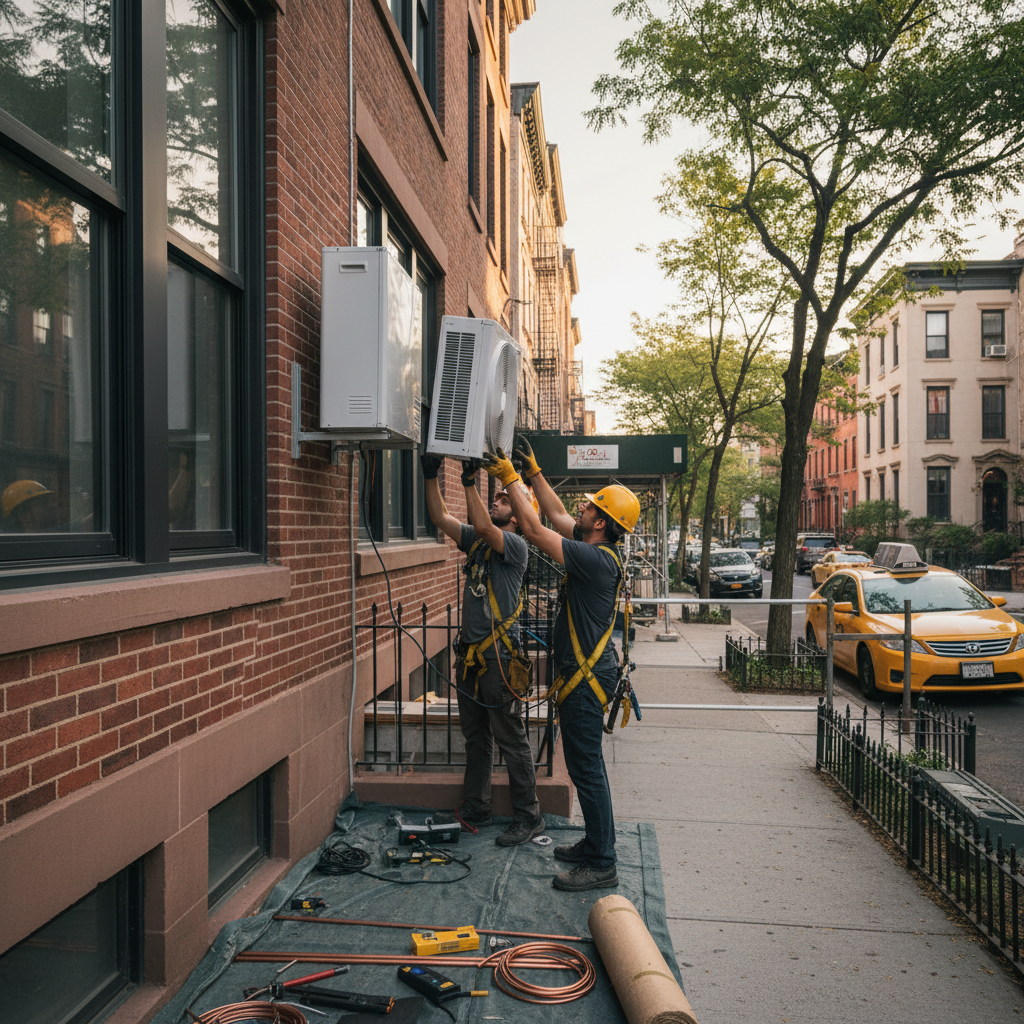
Planning a Mini Split Installation in NYC Duplexes and Multi Family Homes
Begin by measuring room areas, identifying wall and window obstructions, and calculating BTU loads for each space. For mini split installation multi family home nyc projects, mark likely indoor unit locations, note potential outdoor compressor sites, and record the building meter and service panel capacity before you contact a licensed contractor.
Step 1: Confirm code and building rules
Check local Department of Buildings regulations and any building-specific rules such as co-op or condo board approvals. In many cases, altering a common facade or installing equipment on a shared roof or balcony requires formal DOB filings and board sign-offs. Record filing types, required drawings, and expected review timelines to avoid unexpected delays.
Step 2: Survey electrical capacity
Mini splits add dedicated circuits and a compressor load. Have a licensed electrician inspect the service panel to confirm available breaker capacity and space for a new double-pole breaker or subpanel. Typical small multi zone systems need 20 to 60 amps depending on compressor size. If the building meter cannot support additional load, plan for a service upgrade well before installation.
Step 3: Choose system type and sizing
Select single-zone systems for one room or multi-zone units for apartments that need separate controls. Calculate BTU requirements using room area, ceiling height, insulation, window exposure, and occupant load. A common rule is 20 to 30 BTU per square foot, adjusted for NYC building construction and exposure. Oversizing reduces efficiency; undersizing will leave rooms uncomfortable.
Indoor and outdoor placement considerations
Place indoor units where airflow is unobstructed and lines can run to an outdoor condenser without long refrigerant runs. Outdoor compressors need clear airflow and a secure mounting surface. In NYC duplexes and small multi family buildings, roof or side-yard mounts are common. Avoid placing compressors on balconies where neighbors may object or where code limits exterior equipment.
Installation timeline and phases
Plan the project in these phases: site survey and permit prep, electrical upgrades, equipment delivery, wall or ceiling penetrations, mounting indoor units, routing refrigerant and condensate lines, outdoor compressor installation, system commissioning and training. A typical two-zone installation in an accessible duplex unit can take two to three days of onsite work after permits and wiring are completed.
Permits and DOB filings
For many multi family projects in New York City, filings include an Alteration Type 2 or 3 depending on scope, electrical permits for new circuits, and sometimes roofing or facade permits for outdoor mounts. Provide the DOB with equipment specifications, electrical load calculations, and a riser diagram that shows condensate and refrigerant routing. Use a licensed architect or engineer for filings that affect structural elements.
When to choose HVAC replacement over a mini split
If a building has an aging central system with accessible ductwork and the project covers multiple contiguous units, a full HVAC replacement may be more cost effective and maintain consistent ventilation. Choose mini splits when individual zone control, limited ductwork, or lower disruption is the priority. Document lifecycle cost comparisons, including estimated annual energy savings and projected maintenance costs for each option.
Cost ranges and budgeting
Expect installed costs to vary with zones, building access, and permit complexity. Single-zone installations in simple units typically begin at lower amounts, while multi-zone systems for whole apartments or multiple units can increase substantially. Include budget lines for electrical upgrades, structural supports, permit fees, and possible service upgrades. Factor in a contingency for concealed conditions revealed during installation.
Contractor selection checklist
- Verify licensed HVAC and electrical credentials and valid DOB registration when required.
- Request references for multi family and duplex projects in NYC.
- Confirm the contractor will file permits or partner with a registered design professional.
- Compare detailed bids that list equipment models, estimated installation hours, and warranty terms.
- Check whether the contractor offers maintenance contracts and emergency service response times.
Installation best practices
- Use surface-mounted conduits minimally and conceal refrigerant lines where allowed by code to reduce visual impact.
- Install condensate pumps or route drains to approved building drains to prevent water issues in lower units.
- Anchor outdoor compressors to vibration isolators and ensure sound levels meet local limits in shared buildings.
- Label indoor disconnects and provide tenant operation sheets for each unit.
Electrical and structural details
Route wiring and refrigerant lines through chases or newly created penetrations sealed to meet fire-resistance requirements. If a subpanel is needed, place it in a service closet or common area with proper access. For rooftop installations, confirm load-bearing capacity and provide curb or pad mounts per manufacturer guidance. Coordinate with a structural engineer if mounting to parapets or modifying roof structure.
Commissioning and tenant handoff
After energizing the system, run a full commissioning: verify refrigerant charge, confirm thermostat calibration, test all zones for proper airflow and return temperatures, and demonstrate controls to occupants. Provide written operation and maintenance instructions and document the system serial numbers and warranty start dates.
Maintenance recommendations
Schedule filter cleaning or replacement every 3 months for typical occupancy. Inspect condensate drains semiannually, and have a certified technician perform annual inspections of refrigerant charge, electrical connections, and compressor operation. Regular maintenance helps preserve efficiency and extends equipment life.
Common issues and troubleshooting
- Low airflow: check filters, indoor unit placement, and duct obstructions.
- Short cycling: verify correct sizing and refrigerant charge.
- Noise complaints: inspect mounting pads and fan operation, and confirm proper isolation from shared walls.
Financing, incentives, and rebates
Look for state and utility incentives for energy-efficient heat pump installations. Some programs offer rebates or low-interest financing for electrification projects. Contractors and local energy advisors can help identify active incentives and assist with rebate paperwork.
Summary of decision points
| Decision | Considerations |
|---|---|
| Mini split | Best for individual units, minimal ductwork, fast installation |
| HVAC replacement | Better for whole-building consistency, existing duct systems, central maintenance |
Final recommendations
Document building constraints and electrical capacity, get two to three bids from DOB-experienced contractors, and schedule any required service upgrades before the equipment is ordered. Prioritize a licensed team that handles filings and provides a clear schedule for tenant notifications and installation days to minimize disruption in occupied duplexes and multi family buildings.