Skip to content

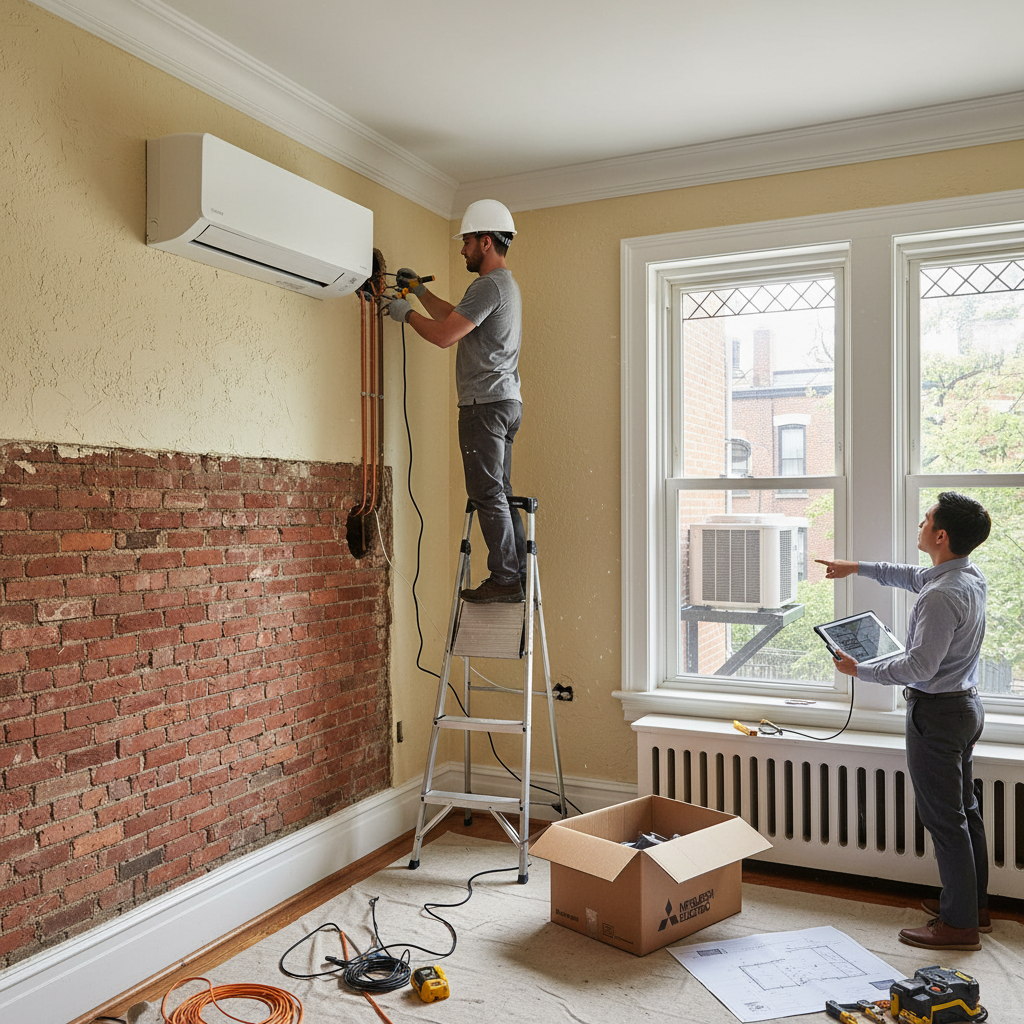
Get started with precise measurements and placement for ductless mini split installation queens
Measure each room and note wall and window positions, then calculate required capacity in BTUs per zone. Sketch the indoor unit location, route for the refrigerant line and condensate, and a preferred outdoor condenser siting that meets local setback and noise guidelines. Verify available breaker capacity at the service panel and confirm whether a dedicated circuit is needed before ordering equipment.
Room sizing and BTU calculations
Choose a sizing method that factors room area, ceiling height, insulation, and sun exposure. For direct guidance, use a formula of 20 to 30 BTU per square foot for typical conditions, then adjust upward for poor insulation or large south-facing windows. For older homes with thin walls and drafty windows, plan on the higher end of the range or consult a licensed HVAC contractor for a Manual J load calculation.
Unit selection and layout strategies
Select indoor unit styles based on wall thickness and aesthetics: wall-mounted units suit plaster and lath walls, low-profile ceiling cassette units work in finished attics or new ceilings, and floor-mounted units can replace radiators near exterior walls. Consider multi-zone systems to serve multiple rooms with a single outdoor condenser when wall penetrations can be grouped on the same side of the building.
Practical installation steps and on-site checks
Before cutting into an exterior wall, mark the indoor unit center, then drill a single penetration for the refrigerant lines, condensate drain, and electrical wiring. Confirm the exterior location is clear of obstructions and allows a 12 to 24 inch clearance around the outdoor unit. Install a condensation drain with a trap and route to an approved drain or condensate pump. For electrical work, run dedicated wiring from the service panel and install a disconnect near the condenser per code.
- Locate the indoor unit at least 7 feet above the finished floor for optimal airflow.
- Drill a 2 to 3 inch hole through the wall at a slight downward angle toward the outdoors to aid condensate drainage.
- Pre-bend and secure refrigerant lines inside a conduit or chase to protect plaster and lath or masonry.
- Mount a solid pad or brackets for the outdoor unit on masonry or a vibration-isolating pad to limit sound transfer.
Electrical, permits, and local code considerations in Queens
Confirm whether the city or the building owner requires a permit by checking New York City Department of Buildings rules and local Queens requirements. Permits commonly require electrical and refrigerant work to be performed by licensed contractors. Provide load calculations and wiring diagrams to inspectors and keep receipts for equipment and labor for building compliance and future resale documentation.
Service panel and breaker upgrades
Many older homes in Queens have 60 amp or 100 amp service panels that may require an upgrade to support modern HVAC loads. A licensed electrician can determine whether the new condenser requires a dedicated 15 to 60 amp breaker depending on system size. If a service upgrade is needed, coordinate timing so panel work is completed before final HVAC connections.
Common obstacles in older buildings and how to address them
Older homes often present challenges such as irregular wall cavities, masonry exteriors, historic preservation rules, and limited access for outdoor equipment. Address each constraint with a plan that minimizes demolition and preserves character. For masonry walls, use core drilling and sleeved penetrations. For buildings in historic districts, select low-profile outdoor units and present visual mitigation plans to the local preservation board if required.
- Plaster and lath: use surface-mounted chases or chase covers to conceal lines without extensive replastering.
- Masonry exteriors: employ professional core drilling and weatherproof sleeves to maintain exterior integrity.
- Tight lot lines: choose condenser models with compact footprints and consider rooftop installations when permitted.
HVAC replacement planning and integration with existing systems
When replacing an entire aging HVAC system, evaluate whether to transition fully to ductless solutions or to a hybrid approach with supplemental ductless zones. Hybrid systems preserve existing ductwork where practical while using mini splits to heat or cool problem rooms. Factor operational efficiency, anticipated lifespan, and maintenance access when comparing full replacement versus partial retrofits.
When to choose full HVAC replacement
Consider a full replacement when ducts are extensively damaged, contain mold, or when repeated repairs have diminished system reliability. A single integrated project can reduce per-unit labor costs, ensure consistent efficiency across zones, and simplify refrigerant management and warranty coverage.
Cost ranges and financial planning
Prepare a budget that separates equipment costs, labor, electrical work, permits, and potential structural repair. Typical one-zone mini split installations start at a lower midpoint, while multi-zone systems and full HVAC replacements rise with increased condenser size, additional indoor units, and electrical upgrades.
| Project type | Typical cost range |
|---|---|
| Single zone mini split installation | $2,500 to $6,000 |
| Multi-zone mini split (2 to 4 zones) | $6,000 to $12,000 |
| Full HVAC replacement with multiple mini splits | $12,000 to $25,000+ |
| Electrical service upgrade | $1,500 to $5,000 |
Costs depend on system efficiency, line set length, number of penetrations, and local labor rates. Get at least three written estimates that itemize equipment model, labor hours, permit fees, and warranty terms.
Maintenance, winter operation, and long term performance
Schedule filter cleaning every 1 to 3 months and an annual service visit to check refrigerant charge, electrical connections, and condensate routing. For Queens winters, choose units with a low ambient heating kit or inverter compressors designed to operate efficiently at low outdoor temperatures. Inspect outdoor units for snow buildup and ensure condensate lines do not freeze.
Warranty and service plans
Confirm manufacturer warranty duration for compressors and parts, and document whether the installer provides a workmanship guarantee. Consider extended service plans that include annual preventive checks and labor coverage for common repairs to protect long term performance.
Choosing contractors and verifying credentials
Hire a licensed HVAC contractor with experience retrofitting older homes in Queens. Verify New York state or city licenses, check references for similar projects, and require proof of insurance. Ask for a detailed scope of work that lists permits, anticipated lead times for equipment, and clear payment milestones tied to completion checkpoints.
- Request references for at least two past installations in older buildings.
- Confirm the contractor will pull required permits and arrange inspections.
- Obtain a copy of any electrical or refrigerant certifications held by technicians who will perform the install.
Final checklist before signing a contract
Ensure the contract includes model numbers and efficiency ratings, a clear scope for wall penetrations and finishes, an agreed schedule that accommodates building access windows, and a statement about responsibility for any necessary structural or masonry repairs. Keep copies of permits, inspection approvals, and manufacturer warranty registrations for future resale value and maintenance continuity.
With accurate measurements, code-compliant electrical work, and a licensed installer, a properly planned ductless mini split installation can modernize climate control in older Queens homes while preserving architectural character and keeping renovation impact minimal.